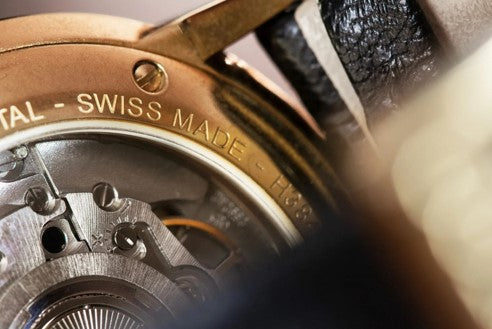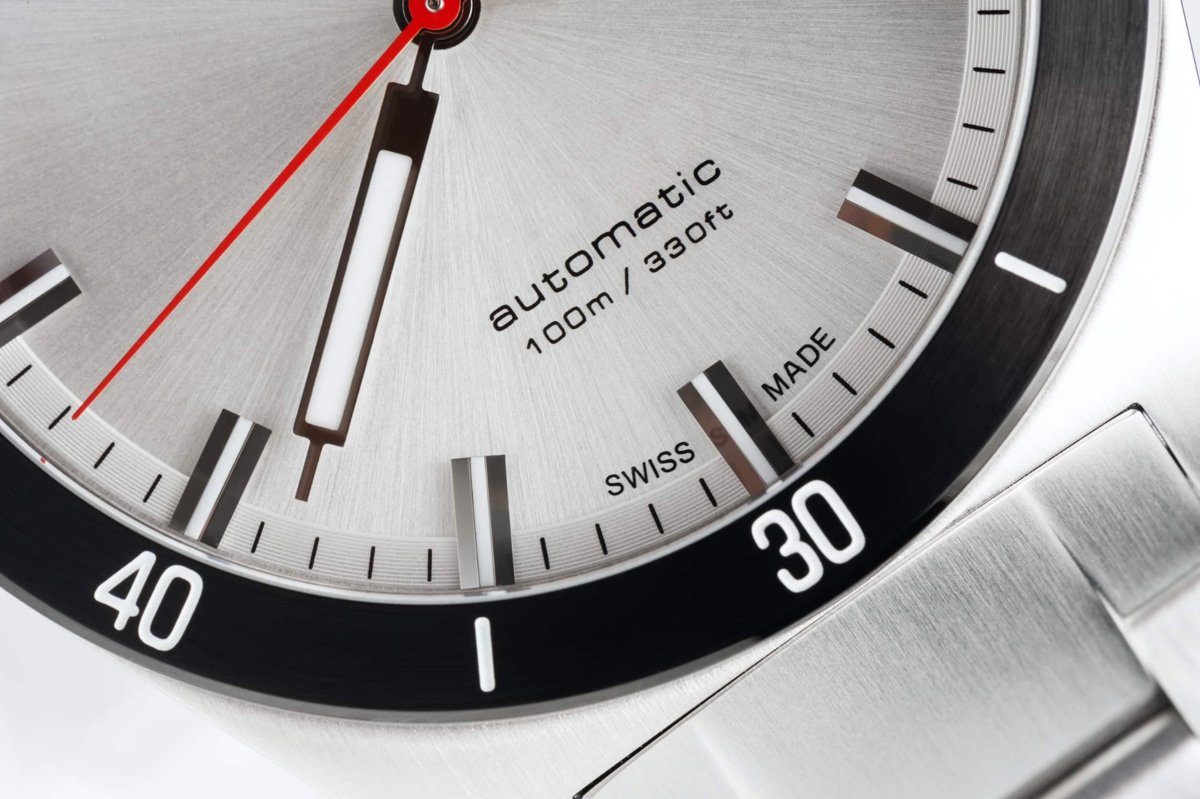

“Swiss Made” is one of the most powerful phrases in watchmaking. For many buyers it signals precision, heritage, and a certain standard of craftsmanship. But it isn’t just a marketing slogan - it’s a legally regulated indication of source. In Switzerland, rules govern not only when a watch may be labelled “Swiss Made” (and related phrases like “Made in Switzerland”), but also how the word “Swiss” and the Swiss cross/flag-like symbols may be used on the watch, its packaging, and advertising.
This article explains - factually and clearly - what those rules are, why they exist, and what they mean for buyers evaluating a watch’s real origin and value.
The Legal Backbone: “Swissness” and the Watch Ordinance

Switzerland strengthened its country-of-origin rules through the “Swissness” reforms, which entered into force on 1 January 2017. These reforms tightened how “Swiss” provenance can be claimed across many product categories, and they explicitly recognise that some industries - watches included - have additional, sector-specific requirements beyond the general origin rules.
For watches, the key legal instrument is the Ordinance on the Use of “Switzerland” or “Swiss” for Watches (often discussed as the “Swiss Made Ordinance” for watches). The Federation of the Swiss Watch Industry (FH) publishes an explanatory guide that reproduces and explains the operative criteria in practical terms.
What “Swiss Made” Means for a Finished Watch

Under the watch ordinance, a finished watch may be regarded as Swiss - and therefore eligible to carry “Swiss” indications such as “Swiss Made” - only if it satisfies a set of cumulative conditions. In essence, the rules require that the watch’s technical development is Swiss, that it contains a Swiss movement, that casing-up happens in Switzerland, that the final inspection is performed in Switzerland, and that at least 60% of the manufacturing costs are generated in Switzerland.
A key nuance is the meaning of “technical development.” The FH guide explains that for exclusively mechanical watches, Swiss technical development includes at least the mechanical construction and prototyping of the watch as a whole being performed in Switzerland. The intention is to ensure that “Swiss Made” reflects not only assembly, but also the genuinely technical stages of creating a manufacturable product.
The 60% Rule: “Manufacturing Costs,” Not “Parts Count”
One of the most misunderstood aspects of “Swiss Made” is the 60% threshold. The ordinance uses a cost-based calculation (manufacturing costs generated in Switzerland), not a requirement that 60% of physical components must be Swiss by number. The FH guide also notes that R&D/technical development costs performed in Switzerland may be included in the Swiss manufacturing-cost calculation.
For buyers, this means a watch can legally qualify as “Swiss Made” even if some components - cases, crystals, dials, bracelets - are sourced internationally, provided the legal criteria (including the cost threshold and Swiss technical/assembly steps) are met. The standard is designed to protect Swiss value creation and accountability, not to mandate that every part must be Swiss.
What Counts as a “Swiss Movement”?
The ordinance doesn’t allow a brand to call a watch “Swiss Made” unless the movement itself is Swiss - so the definition of “Swiss movement” matters. According to the FH guide’s reproduction/explanation of the ordinance, a movement is regarded as Swiss only if it meets requirements including Swiss technical development (mechanical construction and prototyping for mechanical movements), being assembled in Switzerland, being inspected by the manufacturer in Switzerland, and meeting value thresholds (including at least 60% of manufacturing costs generated in Switzerland and at least 50% of the value of constituent parts being of Swiss manufacture, excluding assembly cost).
This is why “Swiss movement” can be a meaningful indicator - yet it’s still not the same claim as “Swiss Made” for the complete watch.
“Swiss Movement” on the Dial: Strict Wording Rules
The ordinance also regulates how “Swiss movement” may be displayed. If a watch contains a Swiss movement, it may use the indication “Swiss movement,” but the term “movement” must be written in full, and it must appear in the same typeface, size, and colour as the word “Swiss.” This is specifically intended to prevent misleading shorthand that implies broader Swiss origin than is justified.
“Made in Switzerland,” “Swiss Quality,” and Similar Claims

The rules do not only cover the exact phrase “Swiss Made.” They also cover other expressions that include “Swiss” or are liable to be confused with it, including phrases such as “Swiss product,” “made in Switzerland,” and “Swiss quality.” The FH guide explains that these “Swiss indications” may be used only for Swiss watches and Swiss movements (as defined by the ordinance), and that the restrictions apply not just on the watch itself, but also on packaging, advertising, invoices, and commercial materials.
Indirect Claims: Why “Swiss Design” Can Be Risky on Watches

In some product categories, phrases like “Designed in Switzerland” can be used as an activity-specific claim. But watches are a special case: because of the small size of wristwatches and strong consumer associations with Swiss origin, the FH guide cautions that terms such as “Swiss Design” or “Swiss Research” on wristwatches are generally not compliant under normal circumstances if they are understood as an indication of origin for the product as a whole. In other words, even “indirect” Swiss cues can be treated as origin claims and therefore must meet the Swiss watch requirements.
The Swiss Cross and Flag-Like Symbols: When They Can Be Used

Swiss symbols are protected, and their use is regulated. Under Swissness rules, the Swiss cross (white cross on red background) may be used on goods for commercial purposes only when the goods genuinely meet the criteria for Swiss provenance. Using the Swiss cross on goods from other countries in a way that falsely suggests a Swiss link is prohibited.
For watches specifically, the FH guide makes the link explicit: watches displaying the Swiss cross must satisfy the same criteria as those using verbal references to Switzerland (such as “Swiss” or “Swiss Made”).
What This Means for Buyers
For buyers, “Swiss Made” is a real, enforceable standard - not a vague promise. It means the watch meets a defined set of Swiss development, movement, assembly, inspection, and cost-allocation requirements. But it is still a minimum legal threshold, not a guarantee of luxury-grade finishing, regulation, or long-term performance. Two watches can both be “Swiss Made” while differing dramatically in case finishing, dial execution, movement grade, regulation, and quality control.
A smart approach is to treat “Swiss Made” as a credibility baseline and then evaluate the watch on its tangible merits: movement specification and regulation, sapphire and coatings, tolerances, finishing, lume, water resistance testing, and the brand’s transparency.
Conclusion: “Swiss Made” Is Defined - But Quality Still Varies
A Swiss watch is “Swiss Made” when it satisfies specific legal requirements, primarily governed by the watch ordinance and reinforced under Swissness reforms. Those rules also tightly control adjacent claims such as “Swiss movement,” “Made in Switzerland,” and the use of the Swiss cross, precisely because these signals carry enormous value and can easily mislead.
Understanding the rules helps you buy with confidence: not simply chasing a label, but recognising what it legally guarantees - and what it doesn’t.
Ready to start building your collection? Browse our mechanical watches now!
Learn more about MN Watches and our design philosophy here.
To see our most recent watch builds, click here.
References (selected):
-
Swiss Federal Council
Ordinance on the Use of “Switzerland” or “Swiss” for Watches
Federal Act governing the legal requirements for Swiss watches and movements.
Fedlex – The official publication platform of Swiss federal law.
https://www.fedlex.admin.ch/eli/cc/1971/1908_1915_1915/en -
Federation of the Swiss Watch Industry FH (FHS)
Guide to the Use of the “Swiss Made” Indication for Watches (Version 5)
Official industry guidance explaining the interpretation and application of the Swiss watch ordinance, including movements, cost calculations, symbols, and wording rules.
https://www.fhs.swiss/file/8/Guide_FH_v.5_en.pdf -
Swiss Federal Institute of Intellectual Property (IPI / IGE)
The Swiss Cross and Swissness
Official guidance on the legal protection and permitted commercial use of the Swiss cross and Swiss indications of source.
https://www.ige.ch/en/protecting-your-ip/indications-of-source/indications-of-source-basics/swissness/the-swiss-cross -
Swiss State Secretariat for Economic Affairs (SECO)
Swissness – Country of Origin Labelling
Overview of the Swissness legislation introduced in 2017 and its application across industries, including watches.
https://www.kmu.admin.ch/kmu/en/home/concrete-know-how/sme-management/labeling/swissness.html
Editorial note:
Legal interpretations may evolve. Buyers and manufacturers should refer to the latest official publications from Swiss authorities and the Federation of the Swiss Watch Industry for current requirements.