When shopping for a mechanical watch, buyers often focus on design, case size, or brand identity. But beneath the dial lies the most important component of all: the movement.
Swiss movements, in particular, carry a reputation for precision, durability, and heritage. Names like Sellita, ETA, and STP appear frequently on specification sheets - yet many buyers aren’t quite sure what these movements actually represent, how they differ, or why they matter.
This article explains the modern Swiss movement landscape in clear, practical terms - so you can make informed decisions based on substance, not myths.
What Does “Swiss Movement” Really Mean?
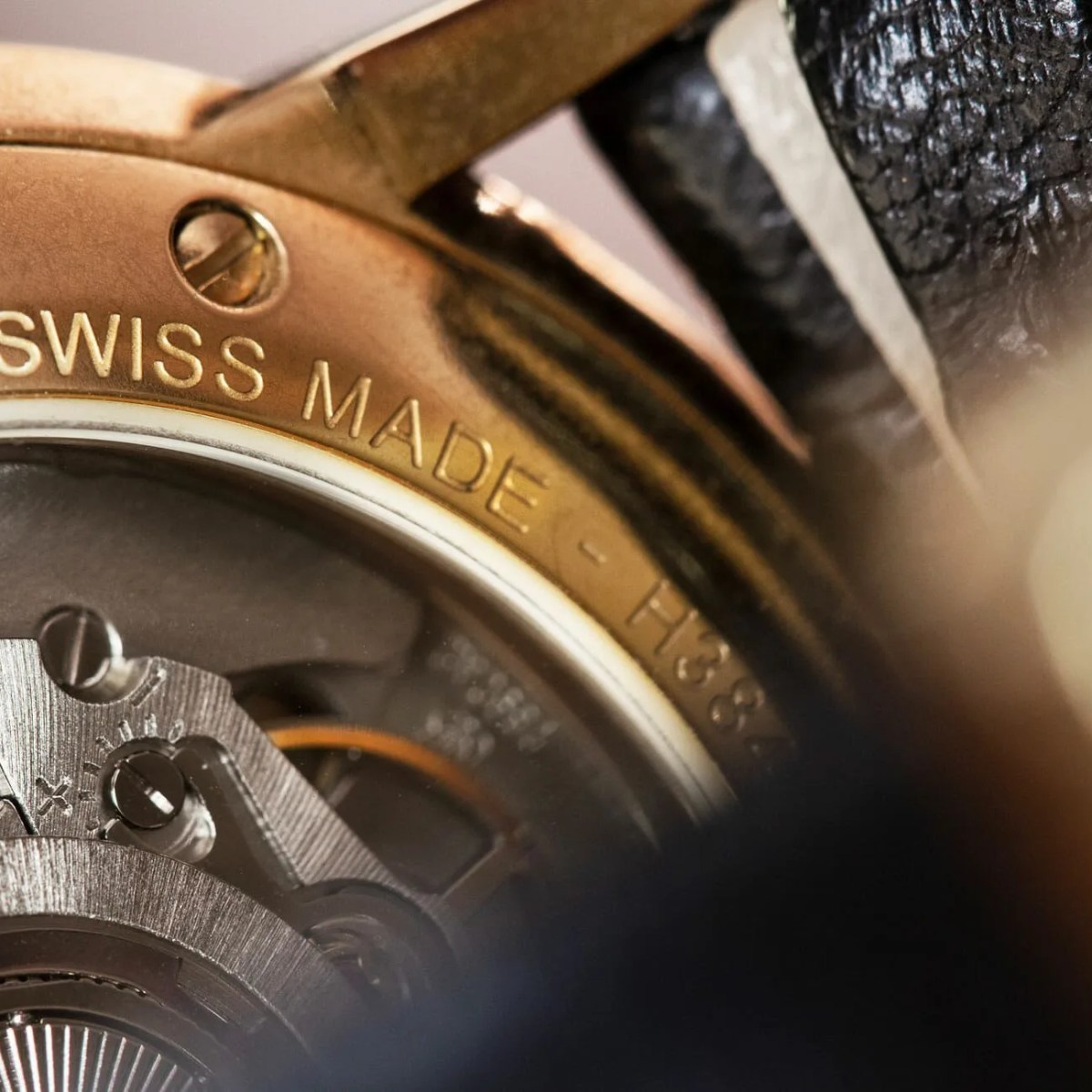
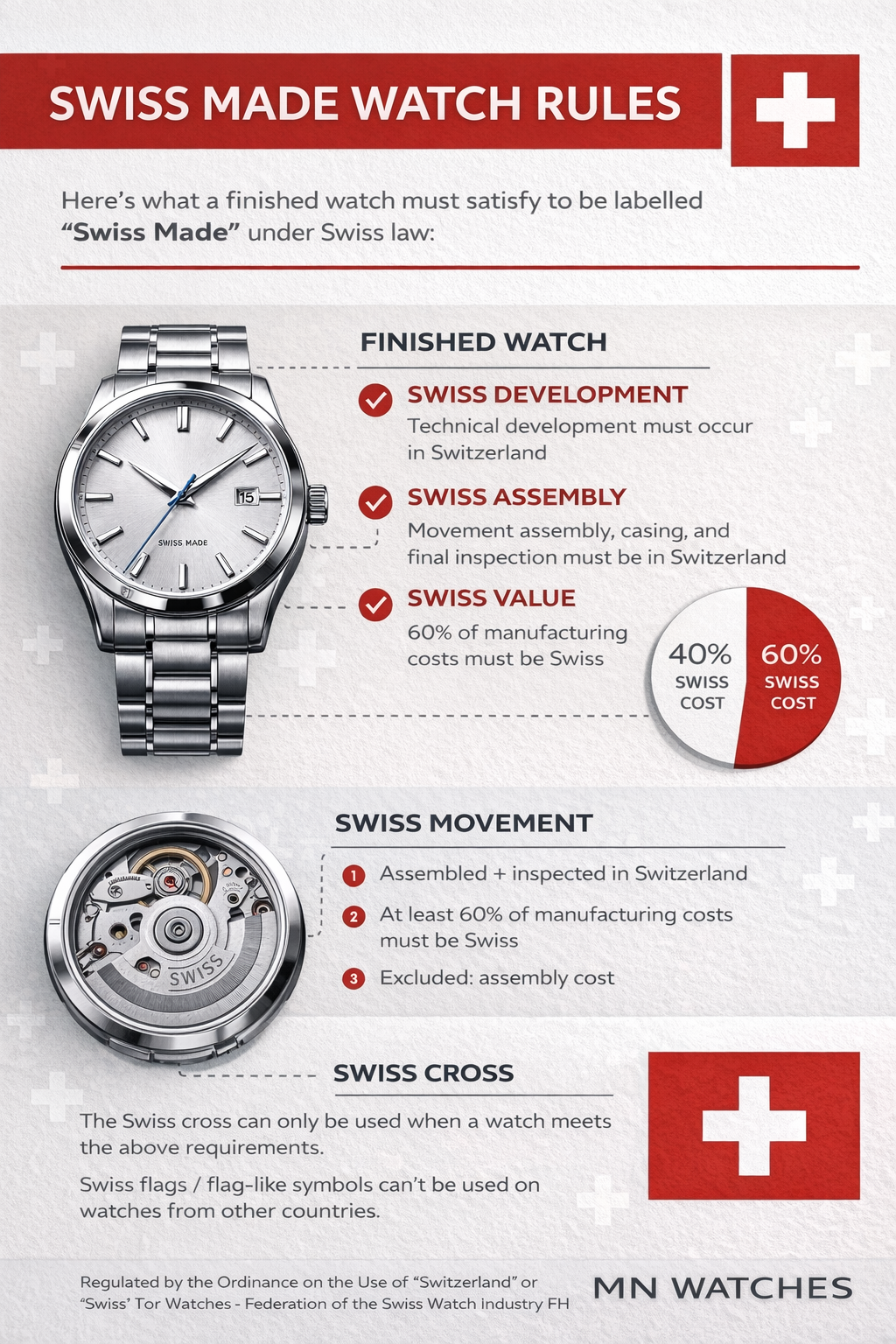
A Swiss movement is not defined by prestige alone. To legally qualify as Swiss, a movement must meet strict criteria related to where it is manufactured, assembled, and inspected. This ensures a baseline of quality, consistency, and accountability.
For buyers, “Swiss” generally signals:
-
Proven engineering standards
-
Long-term serviceability
-
Tight manufacturing tolerances
-
A mature supply and repair ecosystem
But not all Swiss movements are the same - understanding the key players helps cut through confusion.
ETA: The Benchmark That Shaped the Industry
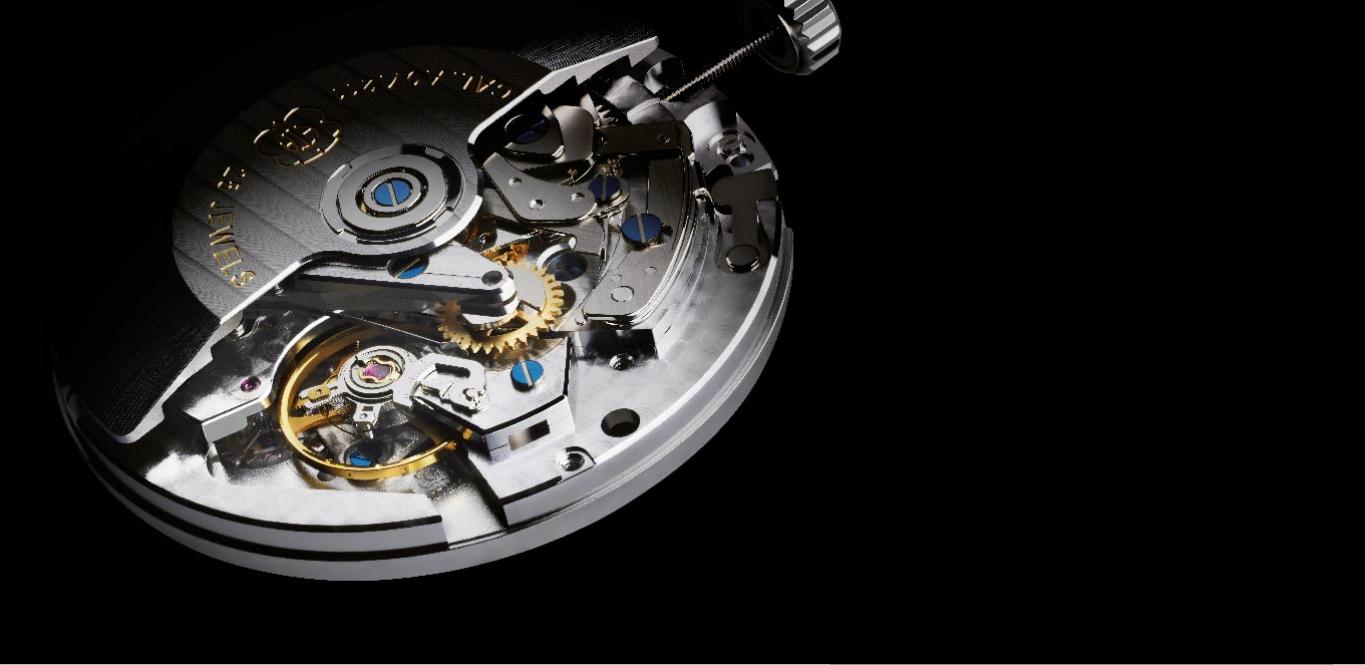
Image source: www.eta.ch
For decades, ETA dominated the Swiss movement market. Their calibres became the industry standard - used not only by luxury brands, but also by countless independent watchmakers.
Movements such as the ETA 2824 earned their reputation through:
-
Robust construction
-
Predictable accuracy
-
Ease of servicing
-
Consistent performance
As ETA gradually restricted supply to external brands, the Swiss watch industry had to adapt. This shift gave rise to alternative manufacturers - most notably Sellita and STP - who built on ETA’s proven architecture.
Sellita: The Modern Swiss Workhorse
Image source: www.sellita.ch
Sellita has become the most widely used Swiss movement manufacturer in the independent and microbrand space.
Their calibres closely follow ETA’s original designs, offering near-identical architecture with modern refinements. For buyers, this continuity is a strength - not a compromise.
Sellita movements are valued for their:
-
Reliability and durability
-
Widespread availability
-
Easy servicing by independent watchmakers
-
Consistent performance across price tiers
In practical, day-to-day use, a well-regulated Sellita movement delivers the experience most buyers expect from a Swiss automatic watch - without unnecessary complexity.
STP: Precision With a Different Philosophy
Image source: www.ablogtowatch.com
STP (Swiss Technology Production) represents a slightly different approach. While still inspired by classic Swiss movement architecture, STP calibres often feature subtle engineering variations, including increased jewel counts and alternative component designs.
STP movements are less common than Sellita, but they appeal to brands looking for:
-
Differentiation
-
Strong technical specifications
-
Swiss manufacturing credibility
For buyers, STP offers another legitimate Swiss option - particularly in watches positioned slightly above entry level, where finishing and specification nuance play a larger role.
How Different Are These Movements in Real Life?
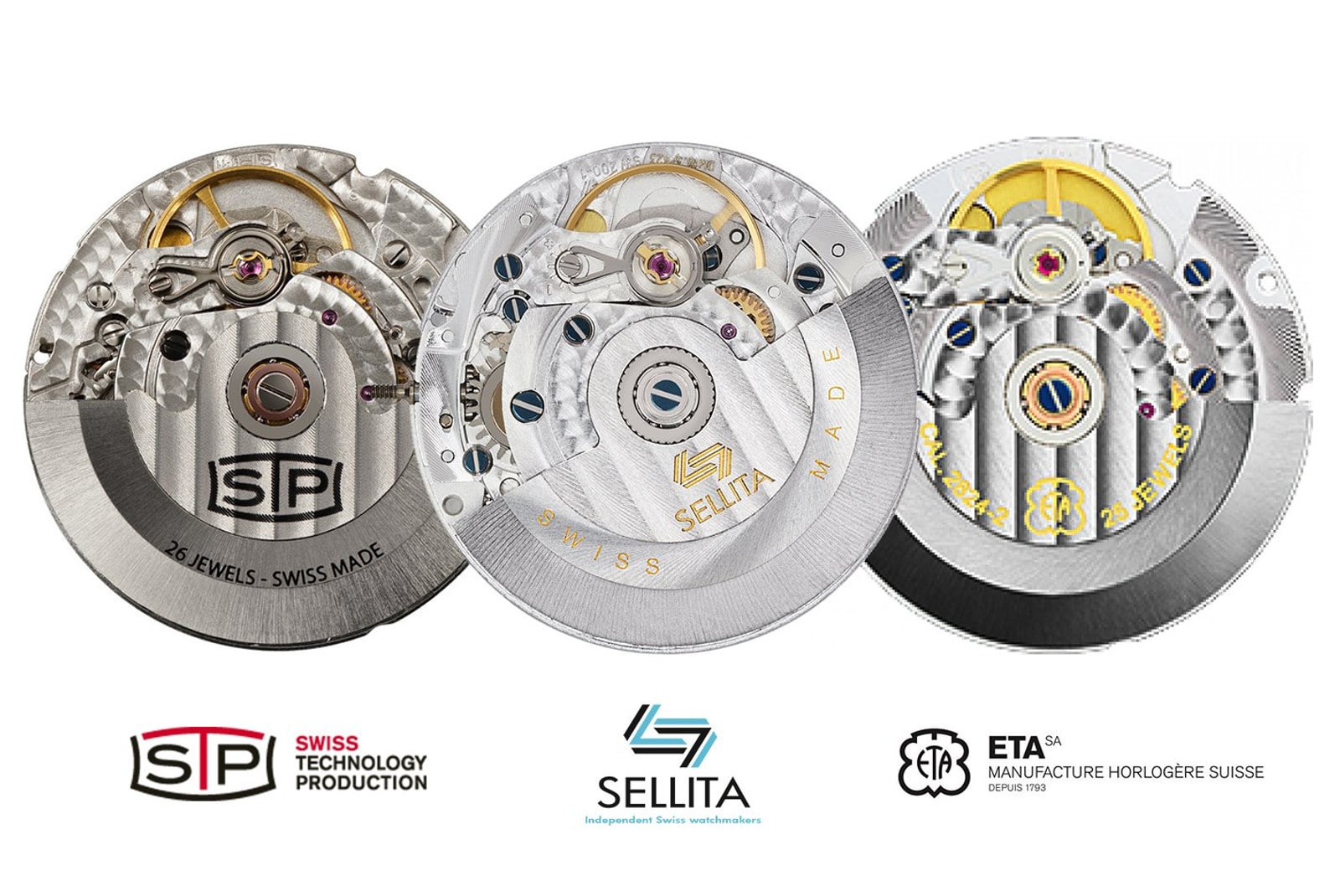
Image source: www.formexwatch.com
From a buyer’s perspective, the differences between ETA, Sellita, and STP are often far smaller than marketing suggests.
In real-world ownership, what matters most is:
-
How well the movement is regulated
-
How carefully the watch is assembled
-
The brand’s quality control standards
-
Long-term service support
A properly regulated Sellita or STP movement can easily outperform a poorly regulated ETA. The name alone does not guarantee accuracy or longevity - the execution does.
Accuracy, Regulation and Expectations
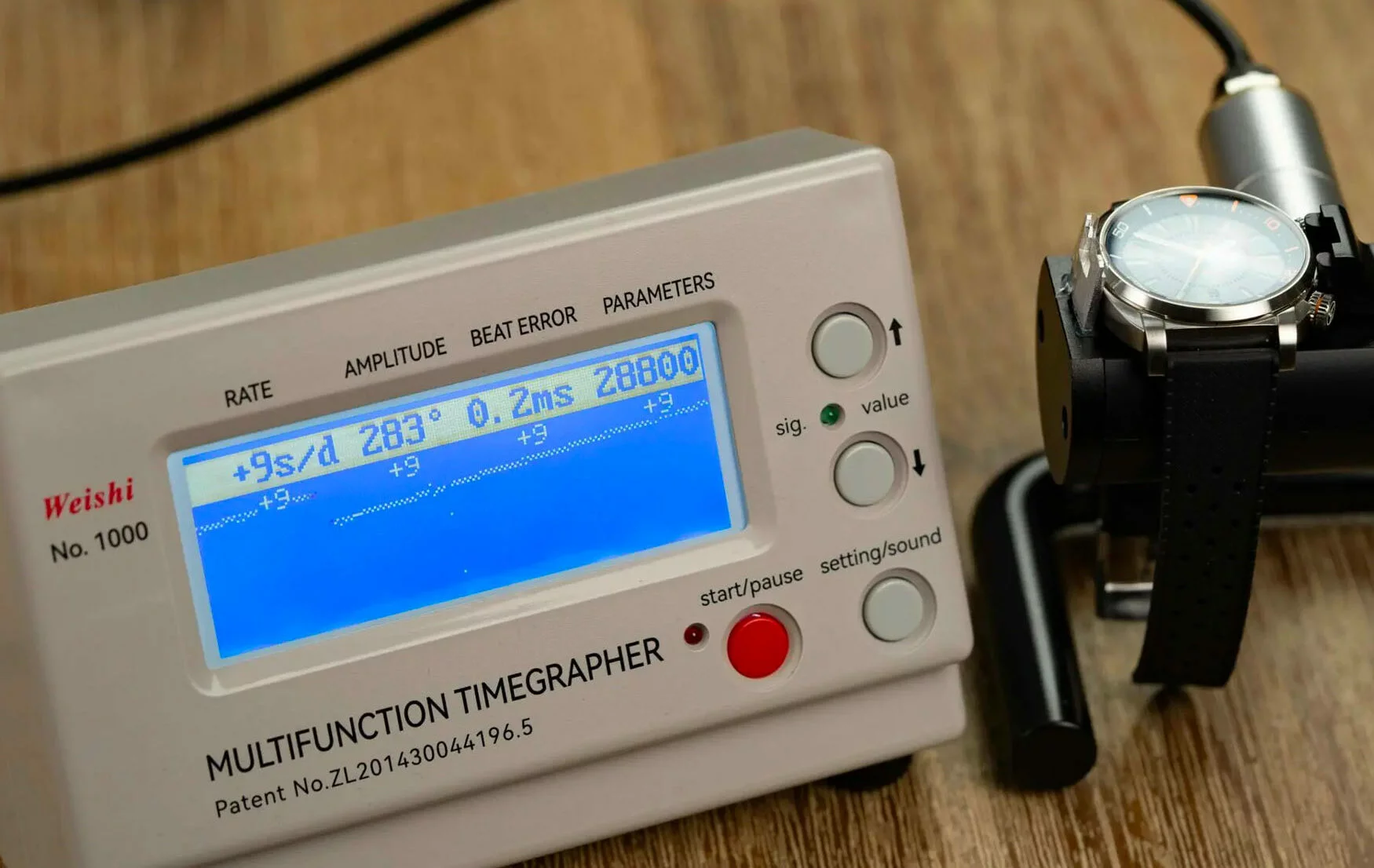
Swiss movements are capable of excellent accuracy, but buyers should understand realistic expectations.
Most non-chronometer Swiss automatics are designed to run within a range of seconds per day. Brands that take the time to regulate movements before delivery often deliver noticeably better performance - regardless of the base calibre.
For everyday wear, consistency matters far more than chasing laboratory-level precision.
Servicing and Long-Term Ownership
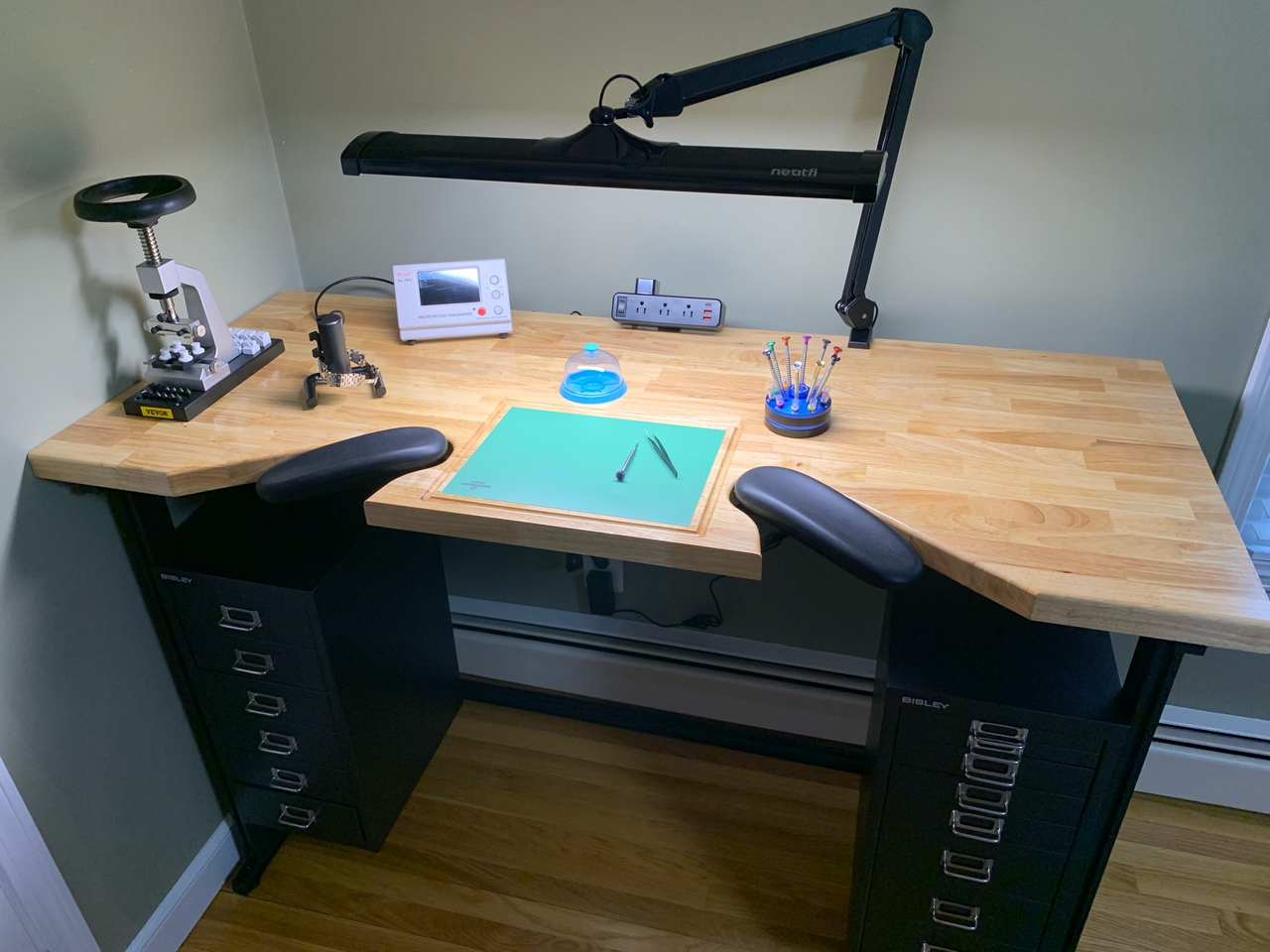
Image source: watchcrunch.com
One of the greatest advantages of Swiss movements is serviceability.
Because ETA-, Sellita-, and STP-based movements are widely used:
-
Parts are readily available
-
Most qualified watchmakers can service them
-
Maintenance costs remain predictable
For buyers, this translates into confidence that a watch can be enjoyed - and maintained - for decades, not just years.
Why Swiss Movements Still Matter to Buyers

Image source: mn-watches.com
In a market crowded with options, Swiss movements continue to appeal because they represent a balance of:
-
Heritage and modern manufacturing
-
Precision and robustness
-
Tradition and practicality
They are not necessarily the most exotic or innovative movements available - but they are among the most dependable, transparent, and proven.
For many buyers, that reliability is exactly the point.
How This Matters When Choosing a Watch
Understanding Swiss movements helps buyers look beyond surface-level branding. It allows you to evaluate a watch based on:
-
Movement suitability for your lifestyle
-
Long-term service expectations
-
Overall value rather than prestige alone
A thoughtfully designed watch using a proven Swiss movement often delivers a better ownership experience than a more expensive piece chosen purely for name recognition.
Conclusion: Focus on Execution, Not Just the Name
Sellita, ETA, and STP each represent legitimate, high-quality approaches to Swiss mechanical watchmaking. None is inherently “best” in isolation.
What truly defines the quality of a Swiss movement watch is:
-
How carefully it is assembled
-
How well it is regulated
-
How transparently the brand communicates
-
How much attention is paid to the details you live with every day
At MN Watches, movement selection is about reliability, serviceability, and honest value - choosing proven calibres that support long-term ownership and everyday enjoyment.
Because in the end, the best movement isn’t the most talked-about one.
It’s the one that quietly performs, year after year, on your wrist.
Ready to start building your collection? Browse our mechanical watches now!
Learn more about MN Watches and our design philosophy here.
To see our most recent watch builds, click here.