How four countries shaped modern horology
We have previously established that mechanical watchmaking did not emerge from a single place or moment in history. Instead, it evolved over centuries through the parallel efforts of craftsmen, engineers, scientists, and innovators across several nations. Among them, four countries stand apart for their lasting, foundational contributions to the art and science of timekeeping:
-
Switzerland
-
Germany
-
Japan
-
United Kingdom
Each nation influenced horology in a distinct way - shaping everything from escapements and movements to industrial production, accuracy standards, and design philosophy. Together, they form the backbone of modern mechanical watchmaking.
Switzerland – The Refinement of Mechanical Watchmaking

From Refugee Craft to Global Standard
Swiss watchmaking began in 16th-century Geneva, where Protestant Huguenot refugees brought fine metalworking and jewelry skills. What set Switzerland apart was not merely invention, but its ability to systematise and refine watchmaking into a scalable yet artisanal industry.
By the 18th and 19th centuries, regions such as the Vallée de Joux became centres of extreme mechanical complexity, producing minute repeaters, perpetual calendars, and early chronographs.
Specific Contributions to Horology
Switzerland’s influence lies in perfecting nearly every major mechanical complication:
-
Refinement of the tourbillon from a theoretical regulator into a wearable complication
-
Standardisation of lever escapements for wristwatches
-
Development of reliable automatic winding systems
-
Establishment of chronometer testing and certification standards
Influential Brands and Innovators
Brands such as Patek Philippe, Rolex, Omega, Audemars Piguet, and Vacheron Constantin defined modern luxury watchmaking - introducing waterproof cases, precision sports watches, and ultra-complicated pocket and wristwatches.
Enduring Legacy
Switzerland transformed watchmaking into a global benchmark of quality and prestige. Its emphasis on finishing, durability, and mechanical excellence continues to shape expectations across all price segments.
Germany – Engineering Integrity and Mechanical Clarity

The Birth of Saxon Precision
German watchmaking emerged primarily in Glashütte, Saxony, in the mid-19th century. Unlike the Swiss cottage-industry model, German horology developed with an explicitly engineering-driven mindset, influenced by scientific instruments and precision manufacturing.
Specific Contributions to Horology
Germany introduced a distinct technical language to watchmaking:
-
The three-quarter plate, increasing movement rigidity and stability
-
Highly legible, mathematically balanced dial layouts
-
Functional finishing focused on longevity rather than ornament
-
Exceptionally precise regulation and assembly tolerances
Influential Brands and Innovators
German excellence is embodied by A. Lange & Söhne, whose rebirth after German reunification redefined modern high horology. Other key names include Glashütte Original and Nomos Glashütte.
German movements are admired for their architectural beauty - wide bridges, gold chatons, and hand-engraved balance cocks that are as structurally purposeful as they are aesthetically striking.
Enduring Legacy
Germany brought discipline, structure, and mechanical honesty to horology, proving that innovation can be quiet, rigorous, and deeply intellectual.
Japan – Precision at Scale and Technological Disruption
A Late Arrival with a Transformational Impact
Japan’s watchmaking journey accelerated in the 20th century, driven by a national philosophy of continuous improvement (kaizen). Rather than imitating Swiss traditions, Japan pursued absolute accuracy, reliability, and efficiency.
Specific Contributions to Horology
Japan fundamentally changed the industry by:
-
Perfecting high-beat mechanical movements
-
Introducing fully integrated manufacturing, producing every component in-house
-
Launching the quartz revolution, redefining timekeeping accuracy
-
Developing Spring Drive, combining mechanical energy with electronic regulation
Influential Brands and Innovators
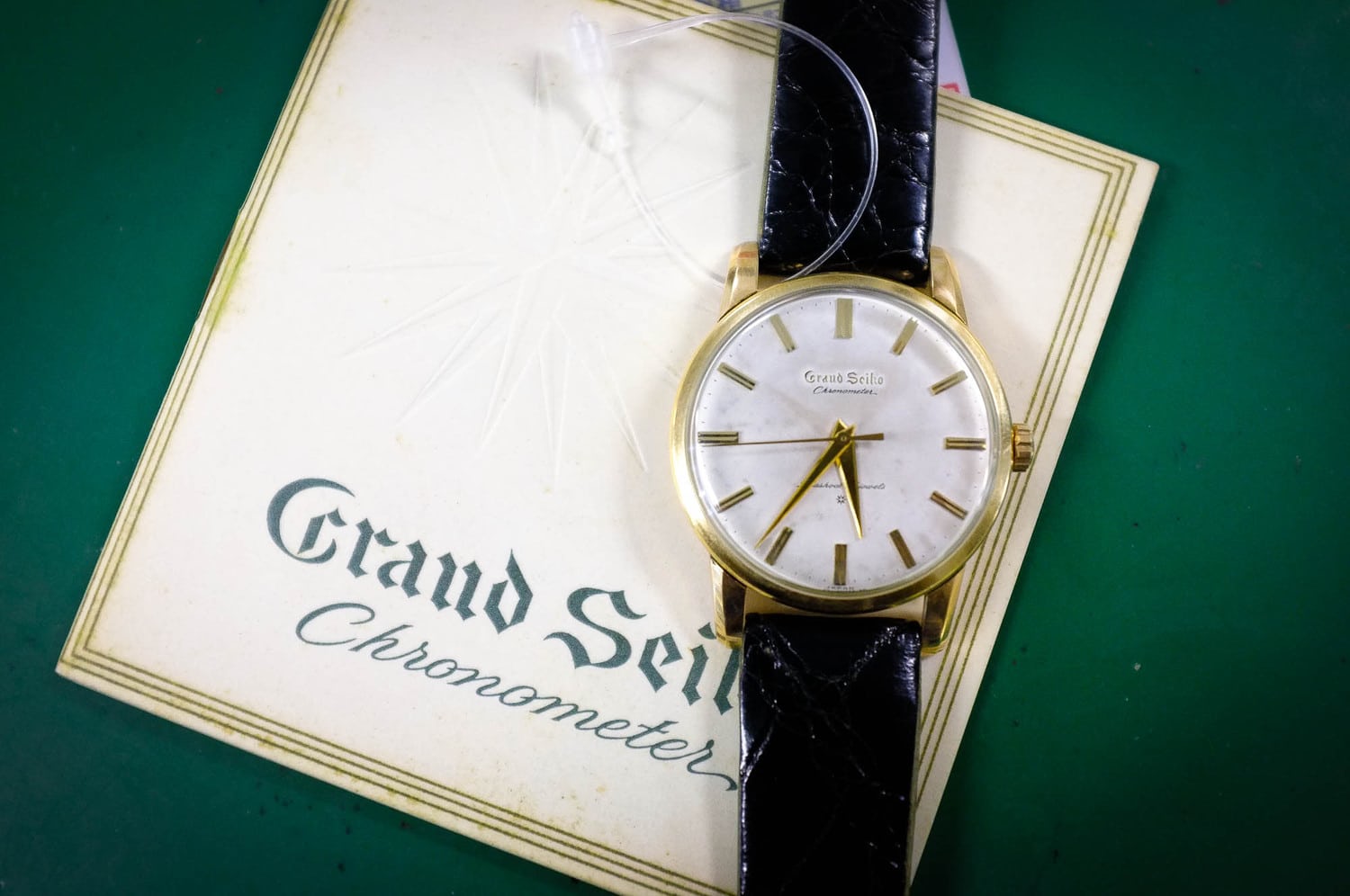
Companies such as Seiko, Citizen, and Grand Seiko challenged centuries-old Swiss dominance and reshaped global expectations.
Grand Seiko, in particular, demonstrated that Japanese finishing, regulation, and design could rival - and in some cases exceed - traditional European standards.
Enduring Legacy
Japan democratised precision. It forced the global industry to evolve, modernise, and ultimately reaffirm the value of mechanical watchmaking in a world defined by accuracy.
United Kingdom – The Intellectual Foundations of Timekeeping

Where Precision Timekeeping Began
British horology dominated the 17th to early 19th centuries, when accurate timekeeping became essential for navigation, astronomy, and global trade. Unlike later industrial watchmaking centres, Britain focused on theoretical breakthroughs and scientific precision.
Specific Contributions to Horology
In some ways, British innovators laid the groundwork for all modern watches:
-
Invention and refinement of the lever escapement
-
Development of highly accurate marine chronometers
-
Establishment of observatory testing and time standards
-
Creation of Greenwich Mean Time, synchronising global clocks
Influential Innovators
The most pivotal figure in watchmaking history is John Harrison, whose marine chronometers solved the longitude problem - arguably the greatest single advancement in precision timekeeping.
Enduring Legacy
While Britain no longer dominates commercial watch production, it remains the intellectual birthplace of modern horology. Every accurate mechanical watch traces its lineage back to British scientific innovation.
A Shared Legacy in Every Mechanical Watch

Modern mechanical watches are the cumulative result of:
-
British scientific foundations
-
German engineering discipline
-
Swiss refinement and artistry
-
Japanese technological innovation
Together, these nations shaped not only how watches are built - but why they matter.
BEYOND THE BIG FOUR
Beyond the “big four” (Switzerland, Germany, Japan, and the United Kingdom), several other countries have made meaningful, distinctive contributions to horology - sometimes historically, sometimes in design, sometimes through modern revival and innovation. Below are the most notable secondary watchmaking nations, and why they matter.
France – The Intellectual and Decorative Roots of Watchmaking
Why France Matters
France was a cradle of early horological thought, especially in the 17th–18th centuries. Paris rivalled London as a centre of scientific instrument making, and French horologists excelled in theoretical innovation and decorative refinement.
Key Contributions
-
Early development of precision escapements
-
Decorative techniques: guilloché, engine-turning, enamel dials
-
Courtly and scientific patronage that elevated watchmaking to high art
Influential Figures & Brands
-
Abraham-Louis Breguet (born in Switzerland, educated and innovating in France)
-
Breguet
Breguet alone introduced or refined:
-
The tourbillon
-
The Breguet overcoil hairspring
-
The Breguet numerals
-
Shock protection concepts
Legacy
France helped define what precision watchmaking could become, blending science, elegance, and intellectual ambition.
United States – Industrialisation and Mass Precision

Why the USA Matters
In the 19th century, the United States revolutionised how watches were made, not through handcraft, but through industrial standardisation.
Key Contributions
-
Interchangeable parts in watch movements
-
Assembly-line watch production
-
Affordable precision timepieces for workers and railroads
Influential Brands
-
Waltham Watch Company
-
Hamilton Watch Company
American railroad watches set new expectations for accuracy, robustness, and regulation, influencing Swiss and global manufacturing methods.
Legacy
While large-scale US watchmaking declined, its industrial principles underpin modern watch production worldwide.
Italy – Design, Case Making, and Tool Watches

Why Italy Matters
Italy’s influence is aesthetic and functional, rather than movement-focused. Italian watch culture shaped how watches look, feel, and are worn - especially in the tool-watch category.
Key Contributions
-
Large, legible dials
-
Strong military and diving-watch identity
-
Emphasis on strap culture and wearability
Influential Brands
-
Panerai
Originally supplying the Italian Navy, Panerai created some of the most recognisable design codes in modern watchmaking.
Legacy
Italy showed that design language and identity can be as influential as mechanical innovation.
Russia – Mechanical Ingenuity Under Constraint

Why Russia Matters
During the Soviet era, Russia developed a self-sufficient watch industry, often under political and technological isolation.
Key Contributions
-
Robust mechanical chronographs
-
Simplified, durable movement architecture
-
Tool watches designed for extreme environments
Influential Brands
-
Poljot
-
Vostok
Legacy
Russian watches are celebrated for engineering pragmatism and toughness, with a strong collector following today.
China – Scale, Component Manufacturing, and Modern Entry-Level Horology

Why China Matters
China is now the world’s largest producer of mechanical watch movements by volume, playing a critical role in modern entry-level and enthusiast watchmaking.
Key Contributions
-
Affordable mechanical movements at scale
-
Revival and production of classic chronograph designs
-
Enabling microbrands worldwide
Influential Brands
-
Seagull
The ST19 chronograph movement, derived from Swiss Venus tooling, is one of the most widely used mechanical chronographs today.
Legacy
China is shaping the future accessibility of mechanical watches, especially for new collectors.
Final Perspective: Horology as a Global Achievement
Horology has never belonged to one country alone. It is a shared global endeavour, shaped by science, craftsmanship, culture, and necessity.
The greatest watchmaking nations - both primary and secondary - each contributed a vital chapter. Every mechanical watch worn today is, in some way, a synthesis of British science, Swiss refinement, German engineering, Japanese precision, and global collaboration.
For modern brands and collectors alike, understanding these contributions deepens appreciation - not just of watches, but of time itself.
Ready to start building your collection? Browse our mechanical watches now!
Learn more about MN Watches and our design philosophy here.
To see our most recent watch builds, click here.