A simple guide to essential watch terms, components, and concepts.
Understanding mechanical watch terminology helps new collectors appreciate what makes these timepieces special. This glossary breaks down common terms into clear, beginner-friendly definitions - perfect for anyone entering the world of horology.
A
Accuracy
How close a watch keeps time compared to the actual time. Mechanical watches may gain or lose a few seconds per day.
Amplitude
A measurement of how far the balance wheel swings. Higher amplitude usually indicates a healthy movement.
Automatic Movement
A movement that winds itself using a rotor that spins with wrist motion. No battery required.


B
Balance Wheel
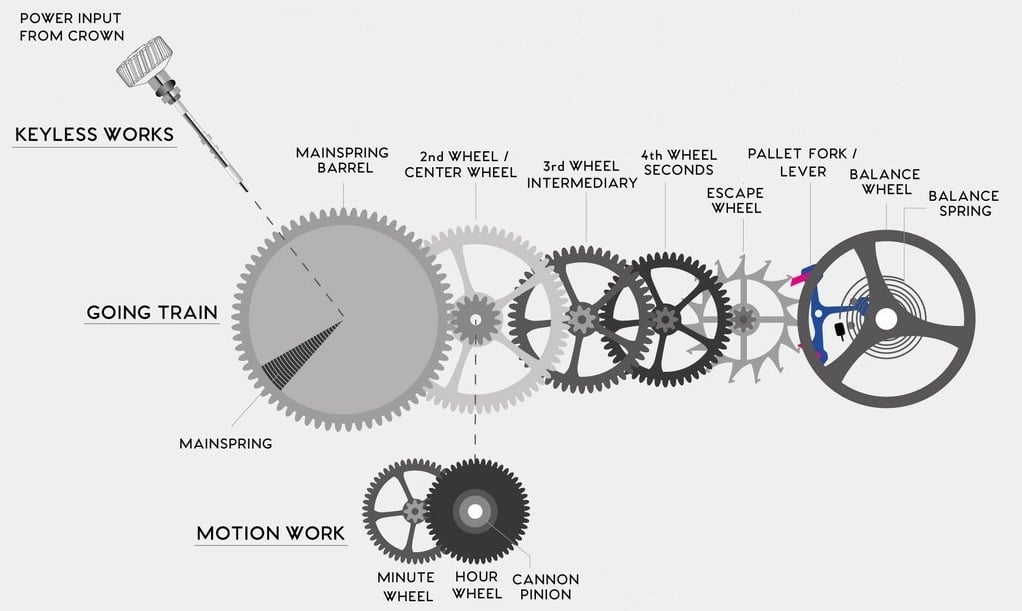
The oscillating wheel that regulates the watch’s timing—often called the “heartbeat” of the watch.
Beats Per Hour (BPH)
How many times the balance wheel swings per hour. More BPH = smoother seconds hand.
Bezel
The ring around the watch crystal. Can be fixed or rotating (like on dive watches).
Bracelet
A metal band or strap made from steel, titanium, or other metals.
Bridge
A metal plate that holds parts of the movement in place.
C
Calibre
Another term for the movement inside the watch (e.g., Sellita SW200, ETA 2824).
Case
The metal housing that protects the movement. Common materials: stainless steel, titanium, ceramic.
Chronograph
A stopwatch function built into a mechanical watch.
Crown
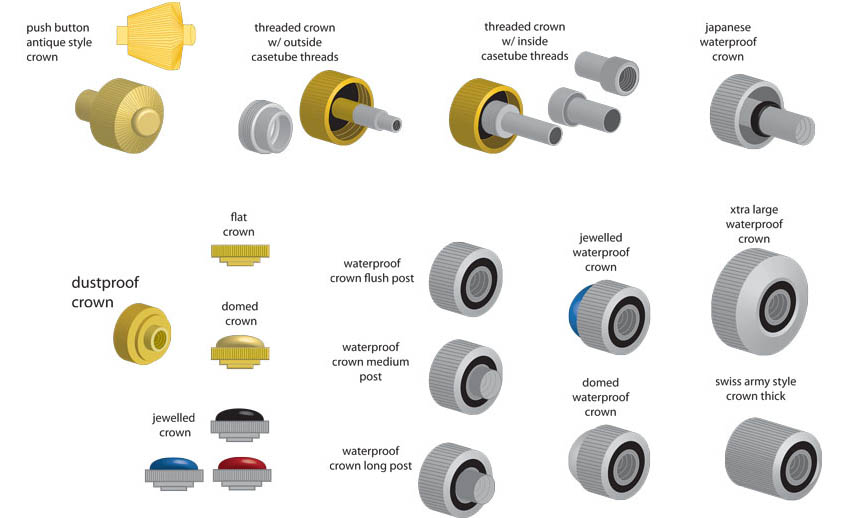
The small knob used to wind the watch and set the time/date.
D
Dial
The face of the watch displaying the hands and markers.
Diver's Bezel
A unidirectional rotating bezel used to measure elapsed time underwater.
Display Caseback
A transparent caseback (often sapphire) allowing you to see the movement.
E
Escapement
The mechanism that controls the release of energy from the gear train, producing the tick-tick-tick.

ETA
A major Swiss movement manufacturer (known for 2824-2, 7750, etc.).
F
Finishing
Decorative techniques on movement parts (e.g., Geneva stripes, polishing, blued screws).
Frequency (Hz)
How many times the balance wheel beats per second.
-
3 Hz = 21,600 BPH
-
4 Hz = 28,800 BPH
G
Gear Train
The series of wheels transferring energy from the mainspring to the hands.
GMT
A complication that tracks a second time zone (Greenwich Mean Time).
H
Hacking Seconds
When the seconds hand stops while adjusting the time—useful for accurate setting.
Hairspring
A tiny spring attached to the balance wheel controlling its oscillation.
Hand-Wound Movement
Requires manual winding via the crown.
I
Indices
The hour markers on the dial.
ISO 6425
The standard governing true diver’s watches.
J
Jewels
Synthetic rubies used as low-friction bearings inside the movement.
K
Knurling
Textured pattern on the crown for better grip.
L
Lugs
The projections on the case where the strap or bracelet attaches.
Lume
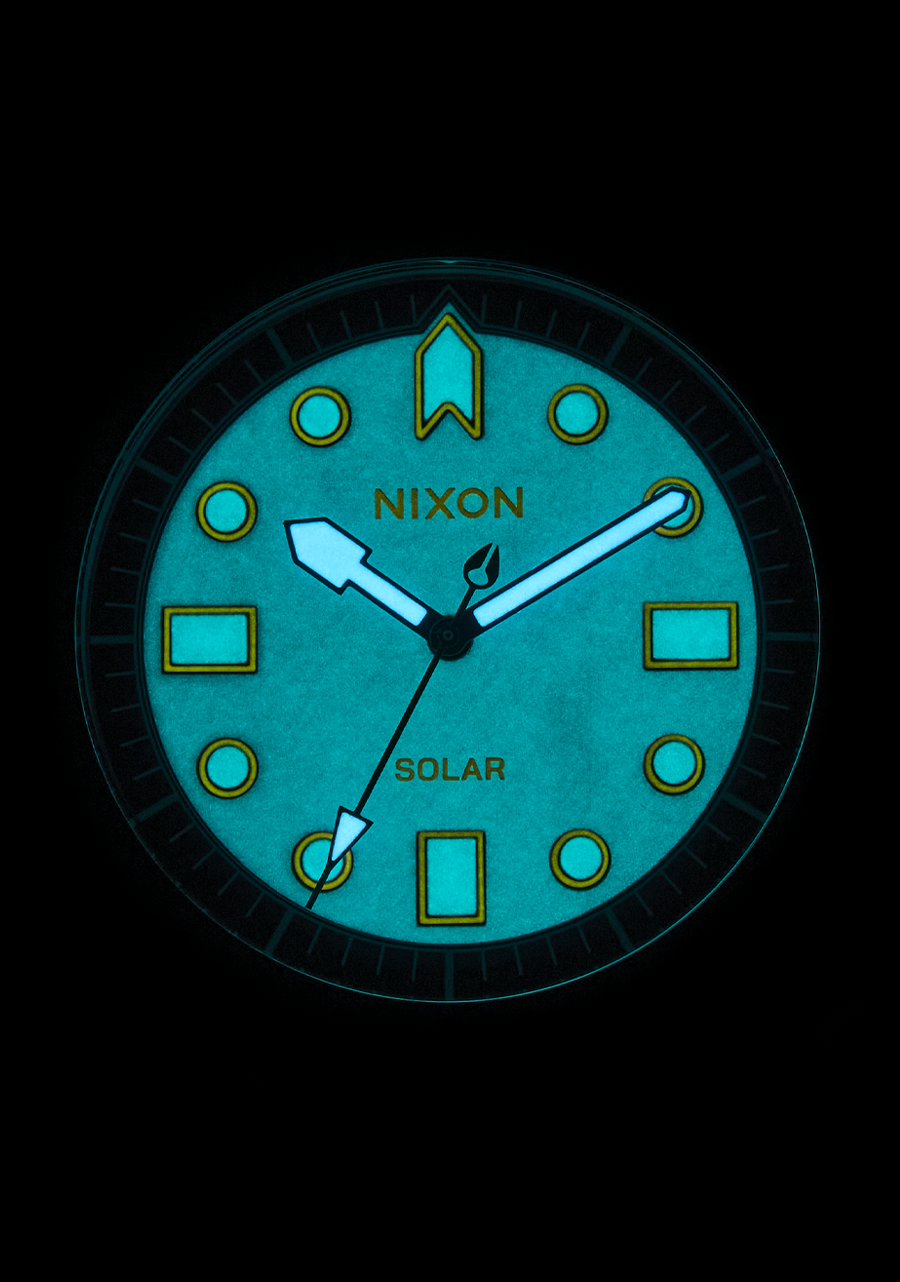
Glow-in-the-dark material applied to hands and markers.

M
Mainspring
The coiled spring storing energy to power the watch.
Movement
The engine that powers the watch; also called a calibre.
Microbrand
An independent small-scale watch company offering unique designs and strong value—like MN Watches.
N
NATO Strap
A durable nylon strap that loops under the watch for security.
NH35
A popular Japanese automatic movement by Seiko.
O
Open Heart
A dial design showcasing the balance wheel through an aperture.
Oscillation
One full back-and-forth movement of the balance wheel.
P
Pallet Fork
Part of the escapement that transfers impulses to the balance wheel.
Power Reserve
How long a fully wound watch will run before stopping (e.g., 38–70 hours).
PVD Coating
A durable case coating method (often black or gold).
Q
Quartz Movement
Battery-powered movement regulated by a vibrating quartz crystal. Extremely accurate but not mechanical.
R
Rotor
A semicircular weight that spins to wind an automatic watch.
Regulating
Adjusting the movement to improve accuracy.
Rehaut
The inner ring between the dial and the crystal.
S
Sapphire Crystal
A scratch-resistant watch crystal made from synthetic sapphire.
Sellita
Swiss movement manufacturer known for the SW200 and SW300 series.
Skeleton Watch
A watch with exposed movement visible through the dial or caseback.
T
Tachymeter
A scale used to measure speed over a known distance.
Tourbillon
A rotating cage for the escapement designed to counter gravity’s effect—rare and expensive.
Tritium
A radioactive gas used for long-lasting lume.
U
Unidirectional Bezel
A safety feature on dive watches; rotates only counterclockwise to prevent accidental tracking errors.
V
Vibrator
An old horology term for a timing tool used before digital timing machines.
W
Water Resistance
Indicates how well a watch can withstand water exposure (e.g., 30m, 100m, 200m).
Winding Stem
The shaft connecting the crown to the movement.
Wrist Shot
A photo of a watch taken on the wrist—popular on Instagram.
Z
Zero Reset
A complication where the seconds hand jumps back to zero when the crown is pulled.
Conclusion: A Glossary Designed for New Enthusiasts
This glossary covers the essential terms beginners encounter when learning about mechanical watches. It’s perfect for linking from your product pages, blog posts, FAQs, and marketing material on mn-watches.com.
Ready to start building your collection? Browse our mechanical watches now!
Learn more about MN Watches and our design philosophy here.
To see our most recent watch builds, click here.