Mechanical watches have fascinated enthusiasts for centuries. Despite living in a world of smartphones and digital precision, these tiny machines—powered solely by springs, gears and mechanical ingenuity—remain one of the most impressive achievements of human engineering.
Whether you’re a collector, a new buyer, or simply curious about the tick-tick-tick on your wrist, this beginner-friendly guide explains exactly how a mechanical watch works, what each component does, and why these timekeeping machines continue to captivate watch lovers around the world.
The Basics: What Makes a Watch “Mechanical”?

A mechanical watch uses no electronics, no batteries, and no circuits.
Instead, it is powered by:
Two possible energy sources:
-
Manual winding: You turn the crown to tighten the mainspring.
-
Automatic winding: A rotor spins as you move your wrist, winding the mainspring.
Everything else—the gears, springs, escapement, hands—runs purely on mechanical energy.
This is why mechanical watches appeal to enthusiasts:
They are living machines, beating thousands of times per hour.
Power Source: The Mainspring
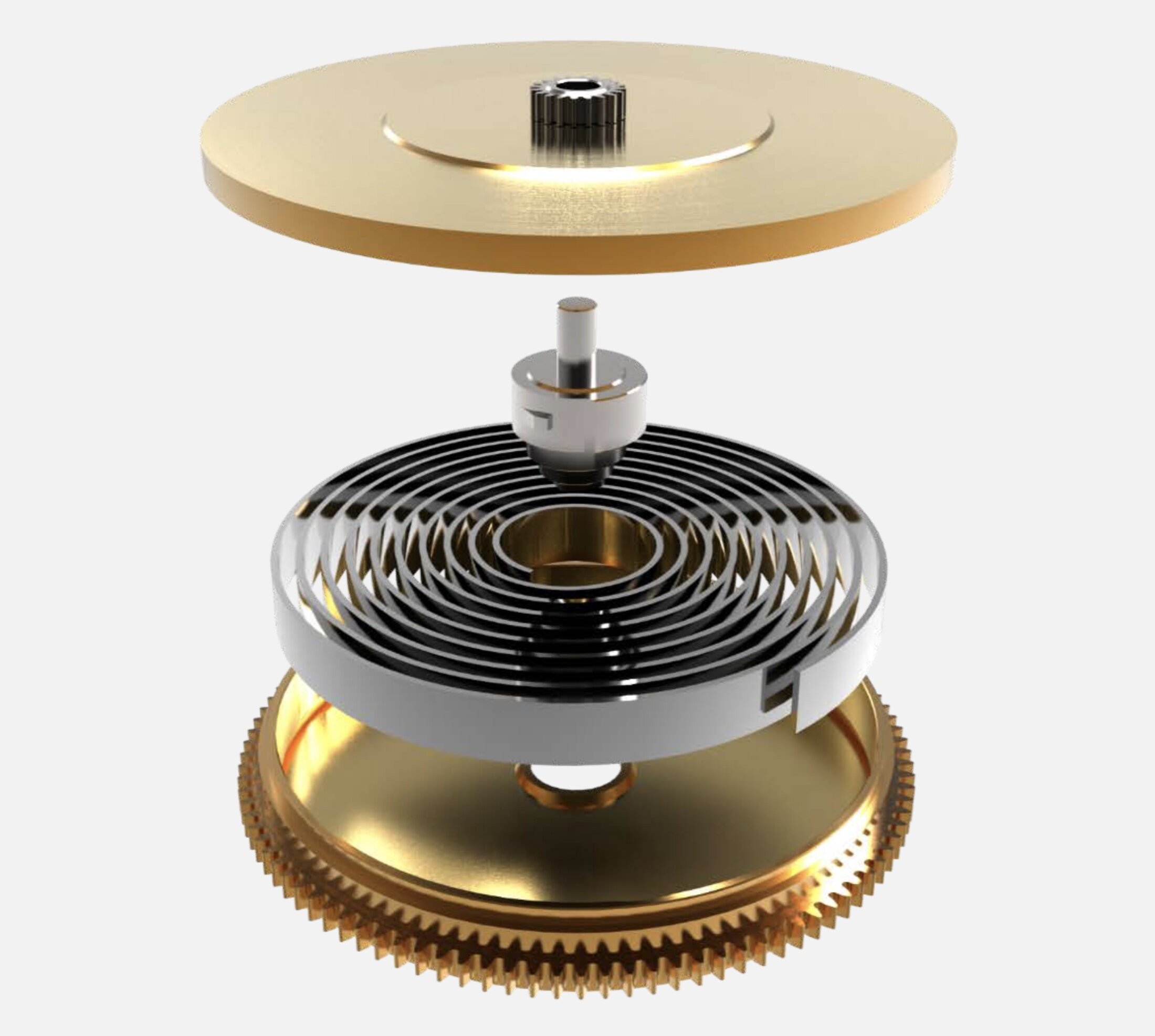 Every mechanical watch begins with a mainspring, a long strip of special metal coiled tightly inside a barrel.
How it works:
-
When wound, the mainspring stores energy.
-
As it unwinds, it releases that energy slowly and evenly.
-
This energy drives the gear train, which moves the hands.
Think of it as a tiny, elegant engine.
A fully wound mainspring typically stores 38–70 hours of power, depending on the movement.
The Gear Train: Transferring Power Through the Movement
 The energy from the mainspring doesn’t go directly to the hands. It must pass through a series of gears known as the gear train, which:
-
Transmits energy
-
Reduces speed
-
Increasing precision
-
Controls how fast the hands rotate
The key gears include:
-
Center wheel: drives the minute hand
-
Third wheel: transmits rotation
-
Fourth wheel: connects to the seconds hand
-
Escape wheel: part of the escapement system
These wheels aren’t random—they are mathematically calculated to ensure 60 seconds per minute and 60 minutes per hour.
The Escapement: The Heartbeat of the Watch
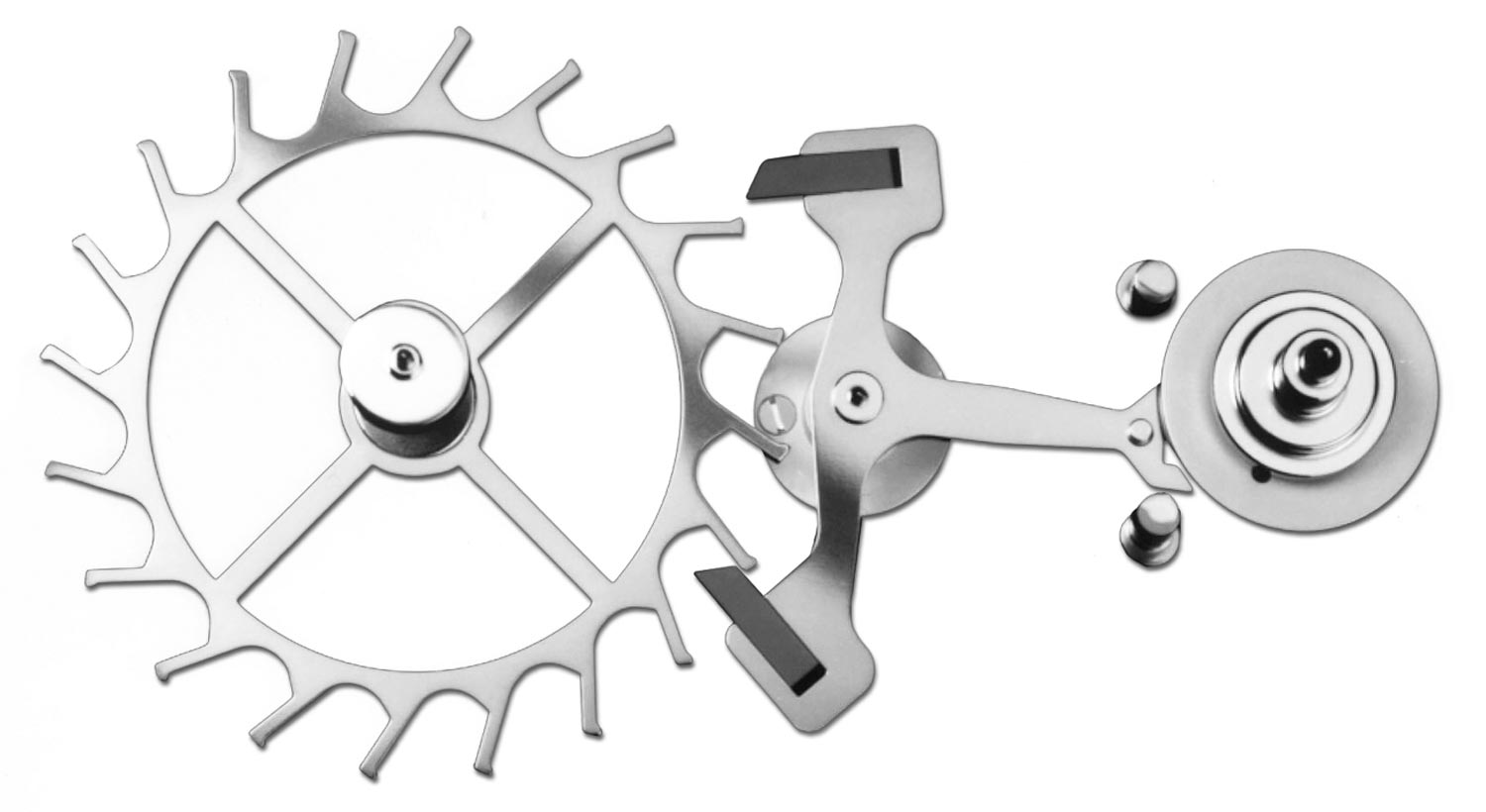 This is where the magic happens.
The escapement controls the release of energy from the gear train in precise, tiny increments. It is responsible for the familiar ticking sound of a watch.
The escapement includes:
-
Escape wheel
-
Pallet fork
-
Balance wheel
How the escapement works—simple explanation:
-
The gear train pushes the escape wheel.
-
The escape wheel transfers energy to the pallet fork.
-
The pallet fork pushes the balance wheel, causing it to oscillate.
-
As the balance wheel swings, it locks and unlocks the pallet fork.
-
Each unlock allows the escape wheel to move one tooth forward.
Each tick is one movement of the escape wheel—one microscopic release of energy.
This is the heartbeat of your watch.
The Balance Wheel: Regulating Time

The balance wheel is the watch’s timekeeper.
It oscillates back and forth anywhere from:
-
18,000 beats per hour (BPH)
-
up to 36,000 BPH in high-beat movements
Attached to it is the hairspring (balance spring), which controls the speed of each oscillation.
Why this matters:
More beats per hour = smoother seconds hand + potentially better accuracy.
For example:
-
28,800 BPH (4 Hz) is common in modern Swiss movements (Sellita SW200, ETA 2824).
-
21,600 BPH (3 Hz) is common in many Japanese movements (Seiko NH35).
Every oscillation tells the watch how fast or slow to run.
The Hands: Displaying Time

After the movement regulates time, the final step is to display it on the dial via the:
-
Hour hand
-
Minute hand
-
Seconds hand
-
Optional complications (date wheel, day display, power reserve, GMT, chronograph, etc.)
The hands are mounted on tiny tubes placed on top of each other, each driven by different gears.
Manual vs Automatic Movements: What’s the Difference?
![]()
![]()
 Manual-Wind Watches
-
Must be wound by turning the crown
-
Usually thinner
-
Loved by purists
Automatic Watches
-
Contain a rotor that spins with wrist movement
-
Convert kinetic energy into stored energy
-
Offer the convenience of self-winding
Both use the same internal principles; the difference is how the mainspring is energized.
Accuracy: Why Some Watches Run Fast or Slow
Mechanical watches are extremely precise for hand-built machines, but even the best ones have tolerances.
Typical accuracy ranges:
-
Standard movements: −20 to +40 sec/day
-
Quality Swiss movements: −5 to +10 sec/day
-
COSC-certified chronometers: −4 to +6 sec/day
Factors that affect accuracy:
-
Temperature
-
Position (dial up, crown down, etc.)
-
Magnetism
-
Shock
-
Wear patterns
Fine-tuning the balance spring and regulator improves performance.
Why Mechanical Watches Still Matter Today

Mechanical watches are more than instruments—they are:
-
Engineering marvels
-
Wearable pieces of art
-
Symbols of heritage and craftsmanship
-
Collectible and personal
-
Sustainable and repairable
And unlike digital gadgets, they age gracefully and often appreciate in sentimental (or real) value.
For enthusiasts and newcomers alike, understanding how they work adds an even deeper appreciation.
Conclusion: A Living Machine on Your Wrist
Every mechanical watch contains a universe of tiny parts working in harmony:
-
The mainspring stores energy
-
The gear train transfers it
-
The escapement controls it
-
The balance wheel regulates it
-
The hands display it
The next time you glance at your watch, you’ll know exactly what’s happening beneath the dial—and why these mechanical masterpieces continue to inspire watch lovers everywhere.
Ready to start building your collection? Browse our mechanical watches now!
Learn more about MN Watches and our design philosophy here.
To see our most recent watch builds, click here.