From simple date displays to mind-bending grand complications
If you’ve ever lost an hour on watch forums wondering what on earth a “perpetual calendar rattrapante” is… you’re in the right place.
This article is a friendly tour through the world of mechanical watch complications - what they are, how they work, and why some are relatively straightforward while others sit at the peak of haute horlogerie. We’ll move from least technically challenging to most technically challenging, and give real-world examples for each type.
What is a complication?
In mechanical watchmaking, a complication is any function beyond the basic display of hours, minutes, and (optionally) running seconds.
-
A three-hand time-only watch → no complication
-
Add a date → simple complication
-
Add a chronograph, perpetual calendar, minute repeater and tourbillon → grand complication territory
Think of complications as layers of functionality, each adding engineering complexity, assembly difficulty, and usually cost.
1. Simple Calendar & Power Reserve Complications
(Least technically challenging)
These are often the first complications a brand explores. They add everyday utility without dramatically increasing thickness or assembly complexity.
1.1 Date (Simple Date / “Big Date” as a sub-step)
What it does:
Shows the current date via a disc under the dial.
Mechanically:
A date wheel advances once every 24 hours using a finger or cam driven by the hour wheel.
Examples:
-
Rolex Datejust 36 – Classic 3 o’clock date with Cyclops magnifier.
-
Seiko 5 Sports – Accessible automatic with simple date window at 3.
Note: “Big date” uses two separate discs (tens + units) for a larger, more legible display—mechanically trickier but still in the “simpler” end compared with what’s coming later.
Big Date examples (included here, but significantly more complex than simple date):
-
A. Lange & Söhne Lange 1 – Iconic oversized date at 2 o’clock.
-
Glashütte Original Senator Excellence Panorama Date – Clean big-date layout with signature Saxon style.

Image source: Glashutte Original

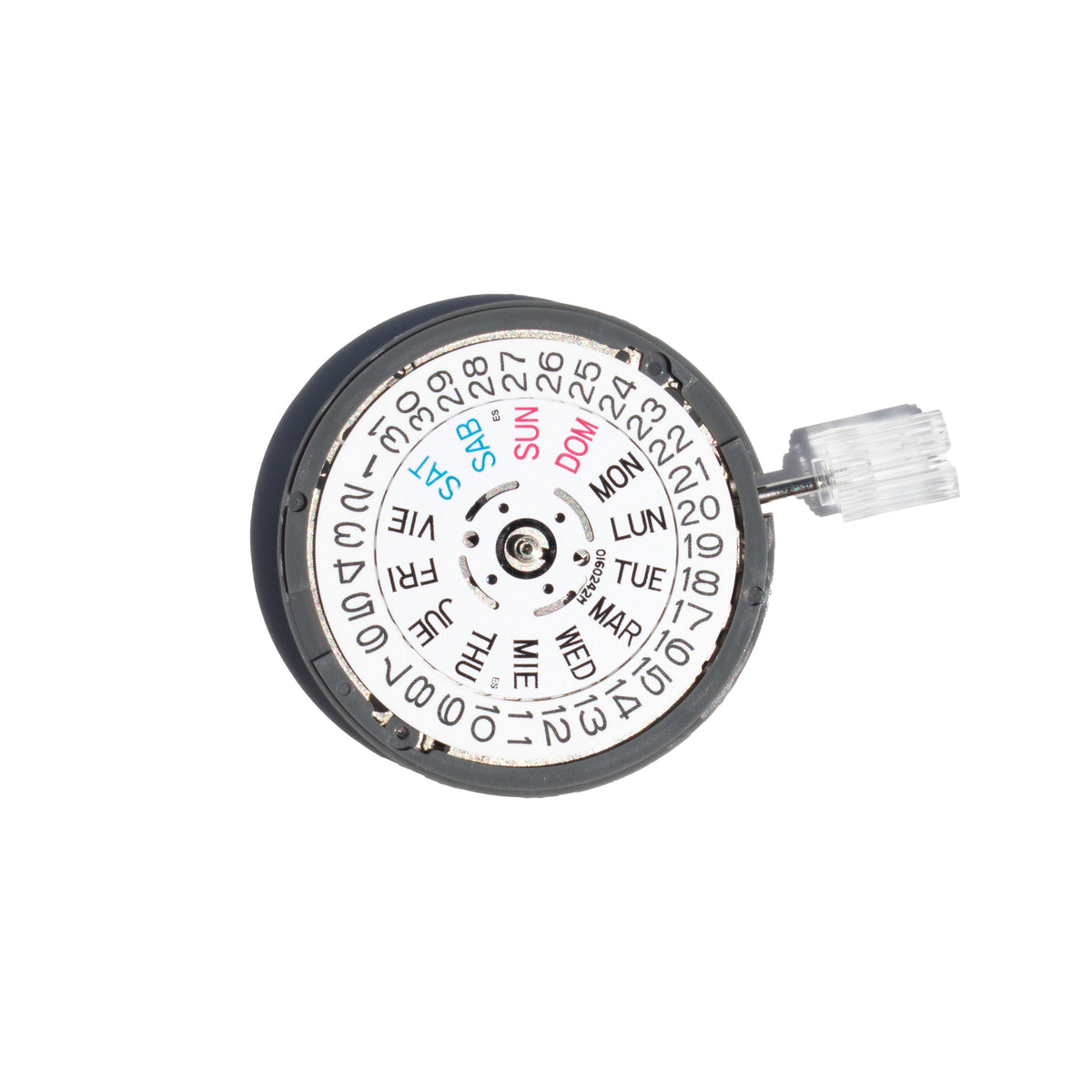
1.2 Day / Day–Date
What it does:
Displays the day of the week; a day–date watch shows both day and date.
Mechanically:
Adds a second disc and switching mechanism for the day. Some jump instantly at midnight; others “creep” over a few hours.
Examples:
-
Rolex Day-Date (“President”) – Day at 12, date at 3.
-
Tissot PRX Day-Date – Sport-chic with both indications in a window at 3.

Image source: Tissot
1.3 Power Reserve Indicator
What it does:
Shows how much energy remains in the mainspring—like a fuel gauge for your watch.
Mechanically:
A small gear train or differential reads the position/torque of the barrel and translates it into an arc or scale on the dial.
Examples:
-
Grand Seiko SBGR series with power reserve – Discreet arc indicator on the dial.
-
Orient Star Classic – Prominent 40-hour power reserve at the top of the dial.

Image source: Orient Star
2. Dual-Time & World-Time Complications
Now we step into complications that track more than one time zone—extremely useful for travellers and business across borders.
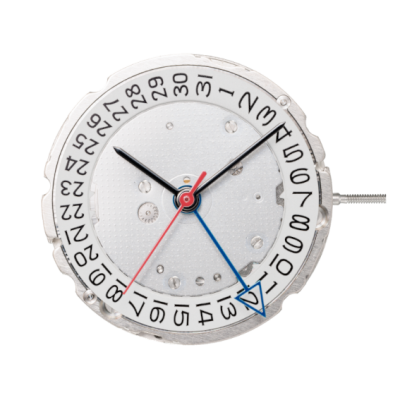
2.1 GMT / Dual Time
What it does:
Shows a second time zone, often via a 24-hour hand and bezel or a sub-dial.
Mechanically:
A secondary hour hand is geared to move at half speed (24h) and can often be adjusted independently. “True” traveler GMTs allow jumping the local hour hand without stopping the movement.
Examples:
-
Rolex GMT-Master II – Independent local hour and 24-hour hand with rotating bezel.
-
Tudor Black Bay GMT – Vintage-styled GMT with “Pepsi” bezel.

Image source: Tudor
2.2 World Time
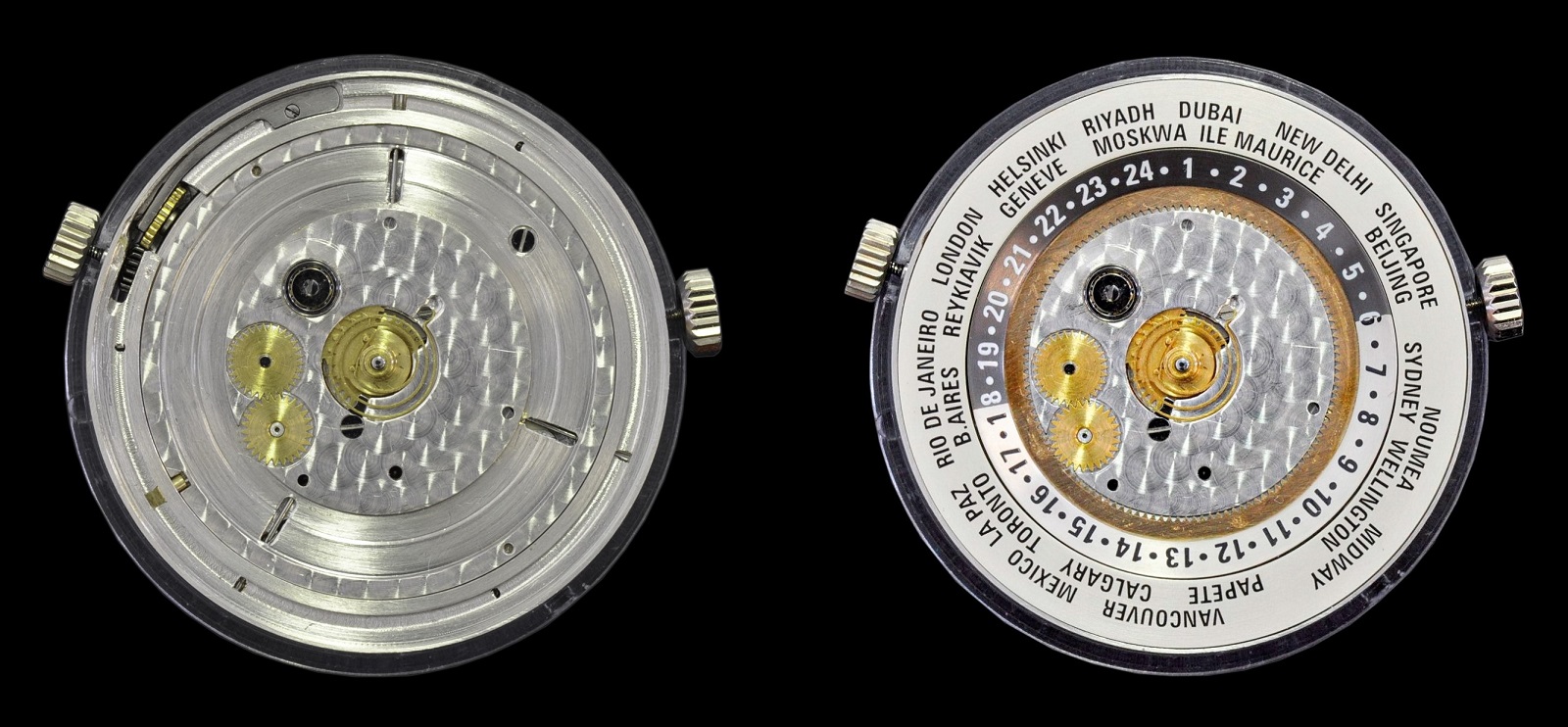
What it does:
Displays the time in 24 world cities simultaneously using a rotating city ring and 24-hour ring.
Mechanically:
The movement drives a 24-hour disc synchronized with local time; a city ring encircles the dial. With one glance you can see global times.
Examples:
-
Patek Philippe World Time Ref. 5230 – Classic world-timer with guilloché center.
-
Jaeger-LeCoultre Geophysic Universal Time – World map with rotating time-zone ring.

Image source: Jaeger-LeCoultre
3. Moonphase & Astronomical Complications
These complications connect your wrist to celestial cycles.
3.1 Moonphase
What it does:
Shows the phase of the moon (new, first quarter, full, last quarter).
Mechanically:
A disc usually advances once per day, using a 59-tooth wheel (for ~29.5-day lunar cycle). High-precision versions reduce cumulative error, sometimes for centuries.
Examples:
-
Jaeger-LeCoultre Master Ultra Thin Moon – Elegant dress watch with moonphase at 6.
-
Longines Master Collection Moonphase – Classic multi-function watch with moonphase and full calendar.

Image source: Longines
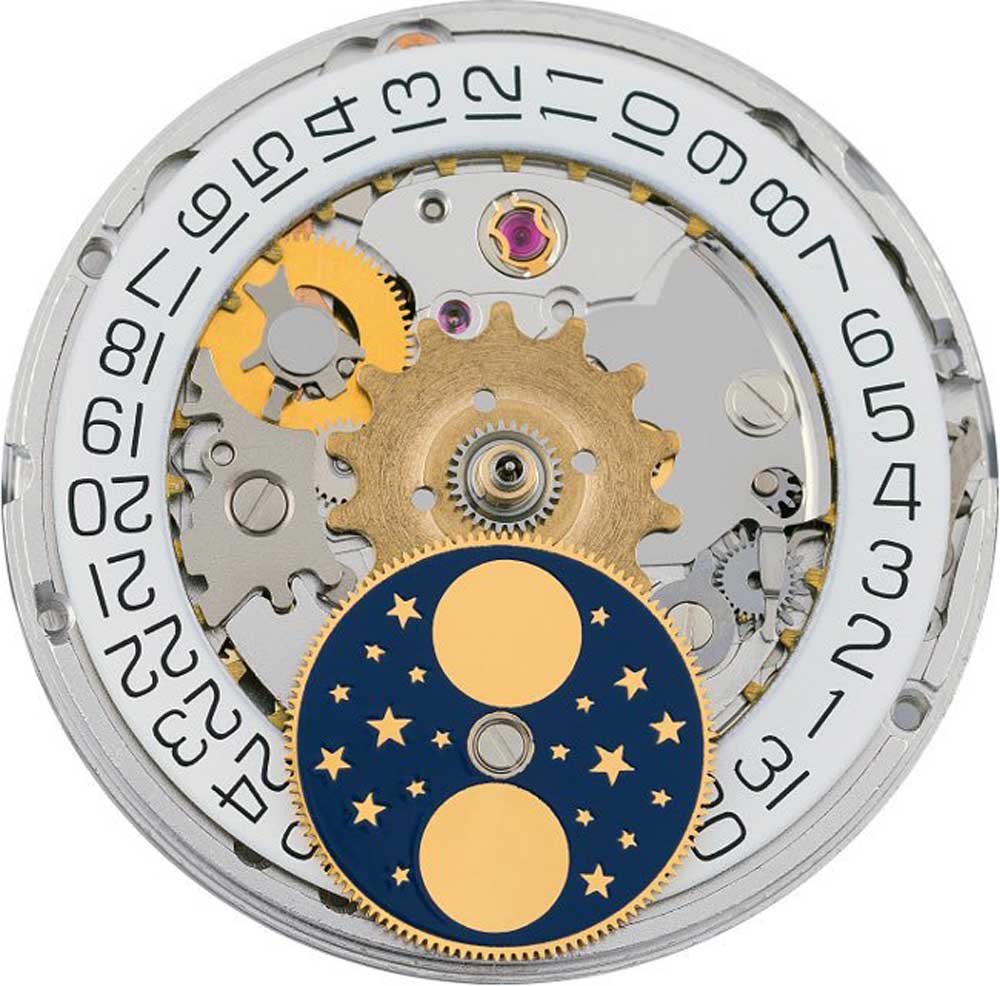
3.2 Simple Complete Calendar (“Triple Calendar”)
What it does:
Displays day, date, and month, sometimes with a moonphase.
Mechanically:
Cam-based system that advances day/date/month but treats every month as 31 days—requires manual correction at shorter months.
Examples:
-
Vacheron Constantin Fiftysix Complete Calendar – Day/date/month + moonphase.
-
Jaeger-LeCoultre Master Control Calendar – Signature “jumping” date over the moonphase at 6.

Image source: Jaeger-LeCoultre

3.3 Equation of Time & Other Astronomical Displays
(Complex, but still below high-end chiming or grand complications)
What it does:
-
Equation of Time: Shows the difference between solar time and mean time (up to ±16 minutes).
-
Others may show sidereal time, star charts, sunrise/sunset.
Mechanically:
Uses specially shaped cams (often kidney-shaped) and levers to convert the date into a time offset.
Examples:
-
Audemars Piguet Royal Oak Equation of Time – Combines perpetual calendar with equation of time.
-
Panerai L’Astronomo variants – Sunrise/sunset and equation of time tailored to a specific location.

Image source: Blancpain
4. Chronograph & Advanced Timing Complications
Chronographs add on-demand timing; highly useful but mechanically challenging.
4.1 Simple Chronograph
What it does:
Times events using a central seconds hand and, often, minute/hour counters.
Mechanically:
An extra mechanism engages/disengages with the going train via a cam or column wheel, plus reset hammers and heart-shaped cams.
Examples:
-
Omega Speedmaster Professional – Iconic manual-wind, cam/column-wheel chronograph.
-
TAG Heuer Carrera Chronograph – Modern automatic chrono with multiple registers.

Image source: Tag Heuer

4.2 Flyback Chronograph
What it does:
Allows you to reset and restart the chronograph with a single press—ideal for timing consecutive events.
Mechanically:
Adds additional levers and coordination so reset hammers can act while the chronograph is still engaged, then instantly re-engage.
Examples:
-
Breguet Type XX – Classic pilot’s flyback chronograph.
-
Blancpain Air Command – Military-inspired flyback chronograph.

Image source: Blancpain
4.3 Split-Seconds (Rattrapante) Chronograph
(Significantly more complex)
What it does:
Measures intermediate times (laps) using two chronograph seconds hands that run together, then one can be stopped while the other continues.
Mechanically:
A second chronograph train overlays the first, with complex rattrapante clamps, isolators, and extra column wheel. The two seconds hands share a central cannon pinion.
Examples:
-
Patek Philippe Ref. 5370P Rattrapante – High-end, hand-finished split-seconds.
-
IWC Doppelchronograph (Pilot’s Chronograph) – More industrial but extremely respected rattrapante.

Image source: IWC

5. Advanced Calendar Complications
These interact deeply with the calendar, adding memory and logic into the movement.
5.1 Annual Calendar
What it does:
Automatically adjusts for 30- and 31-day months; needs correction once per year at the end of February.
Mechanically:
Uses a system of cams and a 12-month program to identify which months have 30 or 31 days.
Examples:
-
Patek Philippe Annual Calendar Ref. 5205 – Month/day/date in apertures.
-
Omega Seamaster Aqua Terra Annual Calendar – Month and date displayed with co-axial movement.

Image source: Omega
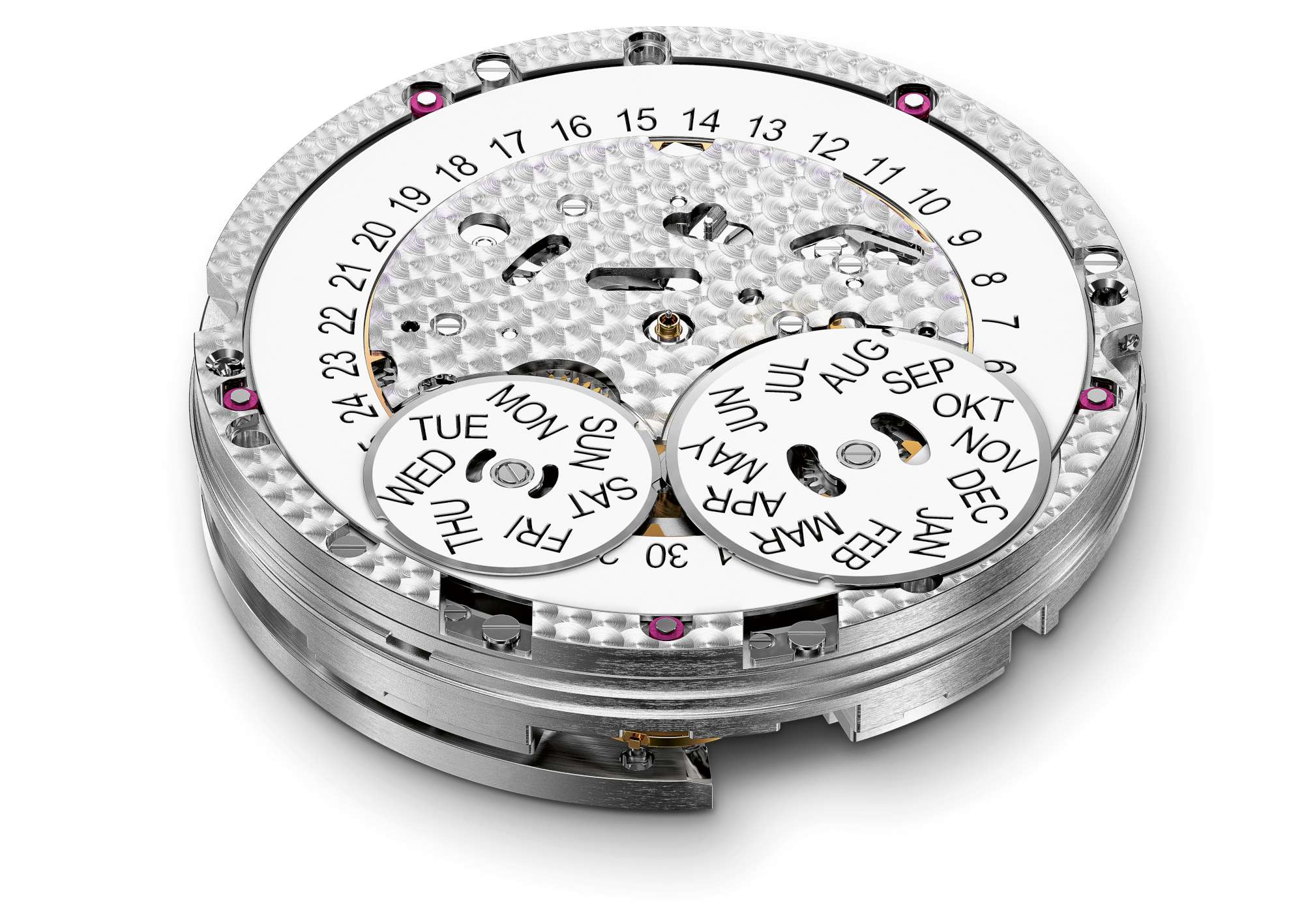
5.2 Perpetual Calendar
(One of the great traditional high complications)
What it does:
Automatically accounts for different month lengths and leap years—in many cases not needing manual correction for decades or even centuries (assuming continued running).
Mechanically:
Complex, multi-layered cam and lever system—or micro-mechanical “computers”—that map a four-year cycle (and sometimes extended cycles) into months and dates.
Examples:
-
Audemars Piguet Royal Oak Perpetual Calendar – Iconic QP in a sports case.
-
Patek Philippe Ref. 5327 – Classical perpetual calendar in a Calatrava-style case.

Image source: Patek Philippe

6. Tourbillon & Constant-Force Mechanisms
These focus on regulating and stabilizing timekeeping.
6.1 Tourbillon
What it does:
Places the escapement and balance wheel in a rotating cage to average out positional errors caused by gravity (originally for pocket watches).
Mechanically:
A rotating carriage (often 60-second period) driven by the gear train while also transmitting power to the escapement. Adds significant parts, assembly difficulty, and regulation challenges.
Examples:
-
Breguet Classique Tourbillon – Tribute to Abraham-Louis Breguet’s invention.
-
Jaeger-LeCoultre Master Ultra Thin Tourbillon – Thin automatic tourbillon with date.

Image source: Breguet
6.2 Multi-Axis / Flying Tourbillon
(More complex than standard tourbillon)
What it does:
Improves on the concept with multiple rotational axes or “flying” support (no upper bridge), creating a 3D ballet.
Mechanically:
Nested cages rotating at different speeds; flying versions are cantilevered from one side only, demanding extreme precision and rigidity.
Examples:
-
Greubel Forsey Double Tourbillon 30° – Double-cage tourbillon at an inclined angle.
-
Jaeger-LeCoultre Gyrotourbillon – Multi-axis spherical tourbillon.

Image source: Jaeger-LeCoultre

6.3 Constant-Force (Remontoir, Fusée-and-Chain)
What it does:
Delivers more consistent torque to the escapement as the mainspring unwinds.
Mechanically:
-
Remontoir d’égalité: Stores a small charge of energy and releases it in consistent steps.
-
Fusée-and-chain: Cone-shaped pulley and tiny chain equalize torque from the barrel.
Examples:
-
A. Lange & Söhne Richard Lange Jumping Seconds – Constant-force with jumping seconds.
-
F.P. Journe Chronomètre Optimum / Chronomètre à Résonance – Advanced chronometric solutions including remontoirs.
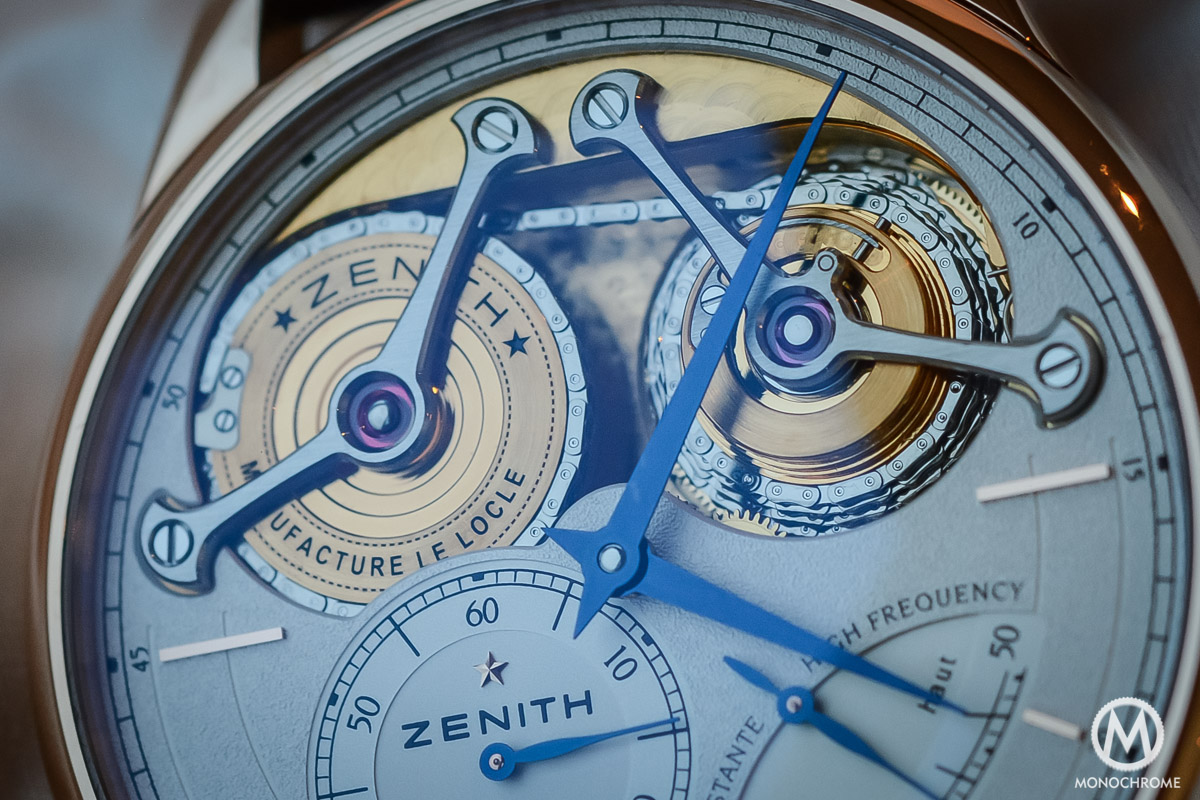
Image source: Zenith
7. Chiming Complications
These translate time into sound—some of the most demanding complications to design and assemble.
7.1 Alarm
What it does:
Sounds a short ring at a preset time.
Mechanically:
Separate barrel or spring powers a hammer that strikes a gong or metal surface. An additional setting system defines the alarm time.
Examples:
-
Jaeger-LeCoultre Memovox – Iconic mechanical alarm watch.
-
Seiko Bell-Matic (vintage) – Classic 1960s/70s alarm watch.

Image source: Jaeger-LeCoultre
7.2 Minute Repeater
What it does:
Chimes the time on demand—usually hours, quarter hours, and minutes—when a slide is activated.
Mechanically:
One of the most complex mechanisms: racks and snails “read” the time from the gear train, then hammers strike tuned gongs in precise sequences.
Examples:
-
Patek Philippe Minute Repeater (various refs.) – Benchmark for repeater quality.
-
Audemars Piguet Royal Oak Concept Minute Repeater Supersonnerie – Focuses on acoustic performance and volume.
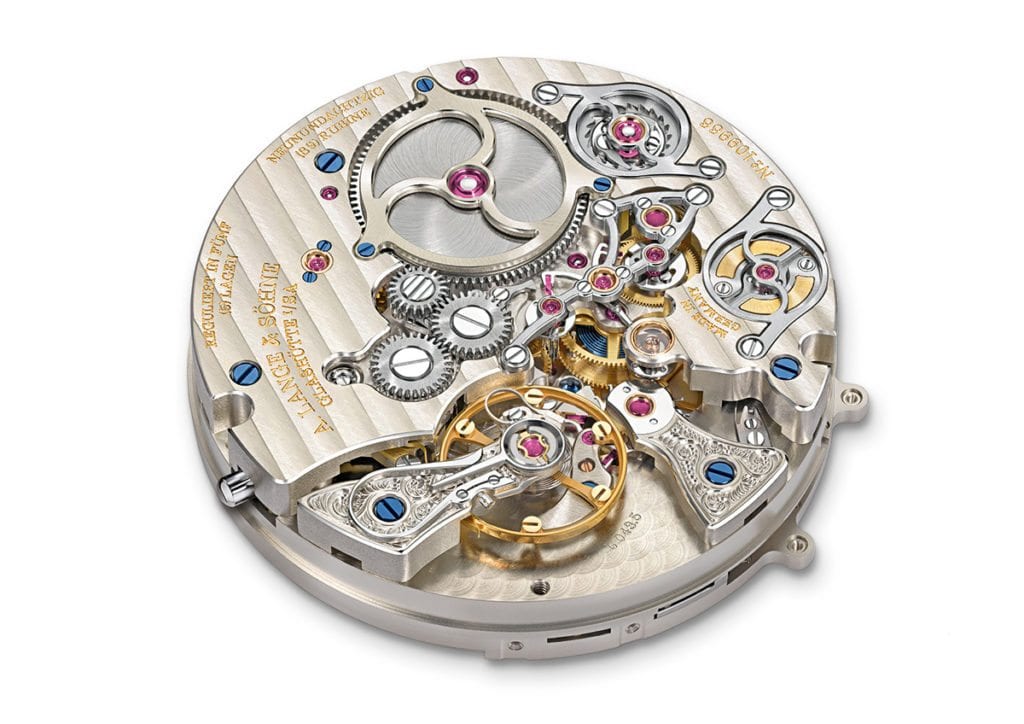
Image source: A. Lange & Söhne
7.3 Grand Sonnerie & Westminster Chimes
(Near top of technical difficulty)
What it does:
-
Grand Sonnerie: Automatically chimes every quarter hour, striking both the hours and quarters.
-
Petite Sonnerie: Chimes only the quarters, omitting the hour count on quarters.
Many also have minute repeater on demand.
Mechanically:
Combines the complexity of a minute repeater with an autonomous striking train that tracks time continuously—extremely energy-hungry and mechanically intense.
Examples:
-
Patek Philippe Grandmaster Chime – Grand sonnerie + minute repeater and many more functions.
-
A. Lange & Söhne Grand Complication – Grand sonnerie, petite sonnerie, minute repeater, chronograph, perpetual calendar.

Image source: A. Lange & Söhne
8. Grand Complications & Ultra-Complex Hybrids
(Most technically challenging)
At the summit, brands combine several high complications into a single movement.
8.1 Classic “Grand Complication”
Traditionally defined (in one common interpretation) as a watch combining at least:
-
Chronograph
-
Perpetual calendar
-
Minute repeater
Some also add moonphase, split-seconds, tourbillon, astronomical indications, and more.
Examples:
-
Patek Philippe Ref. 5208 / 5207 / 6300 – Tourbillon, minute repeater, chronograph, perpetual calendar (variants differ).
-
Vacheron Constantin Traditionnelle Grande Complication – Perpetual calendar, minute repeater, tourbillon, and more.

Image source: Vacheron Constantin
8.2 Multifunction Astronomical “Super Complications”
These push past traditional definitions: maps of the night sky, sidereal time, sunrise/sunset, equation of time, perpetual calendar, chiming, and sometimes more.
Examples:
-
Patek Philippe Sky Moon Tourbillon – Dual-faced watch with tourbillon, minute repeater, and astronomical displays.
-
Vacheron Constantin Les Cabinotiers Celestia Astronomical Grand Complication 3600 – Over 20 complications including triple-time indication (civil, solar, sidereal).

Image source: Vacheron Constantin
Relative Difficulty Summary
Here’s a simplified progression from least technically challenging to most technically challenging:
-
Simple date
-
Day / Day–Date
-
Power reserve
-
GMT / Dual time
-
World time
-
Moonphase
-
Complete calendar (triple calendar)
-
Simple chronograph
-
Flyback chronograph
-
Split-seconds (rattrapante) chronograph
-
Annual calendar
-
Perpetual calendar
-
Equation of time / astronomical displays
-
Tourbillon
-
Multi-axis / flying tourbillon
-
Constant-force systems (remontoir, fusée-and-chain)
-
Alarm (simple chiming)
-
Minute repeater
-
Grand sonnerie / Westminster chime
-
Grand complications & astronomical super-complications
Different watchmakers may debate the order—for example, some will place chiming complications above multi-axis tourbillons, others might argue constant-force systems belong higher. But broadly, anything that combines complex calendars, high-end chronographs, tourbillons, and chiming is at the very top.
How This Helps You as a Collector (or Creator)
When you look at a watch spec sheet now, you can read between the lines:
-
A date + GMT watch is relatively approachable and practical.
-
A chronograph + annual calendar sits in the mid-high complexity space.
-
A perpetual calendar rattrapante with minute repeater is not just expensive—it’s a micro-mechanical sculpture.
Understanding mechanical watch complications is important: not just for marketing language, but for design, pricing, servicing, and how we tell the story of what’s beating inside each case.
Ready to start building your collection? Browse our mechanical watches now!
Learn more about MN Watches and our design philosophy here.
To see our most recent watch builds, click here.